How to Reduce Villa Utility Costs: The 2026 Strategic Pillar
The contemporary maturation of the luxury residential market has moved beyond the era of aesthetic surplus toward a period of functional specificity. For the sovereign traveler, the high-output professional, or the institutional investor, the traditional markers of luxury marble finishes, infinity pools, and high staff-to-guest ratios are increasingly viewed as baseline commodities rather than competitive advantages. In their place, a new hierarchy of value has emerged, centered on “Operational Fidelity.” A villa is no longer merely a dwelling; it is an engineered node designed to facilitate specific psychological and physiological outcomes through the rigorous management of the physical, digital, and metabolic environment.
Identifying and executing the most resilient strategies for these properties requires moving beyond the “cost-cutting” vernacular of standard property management. We are witnessing the professionalization of private space, where the distinction between a high-end hotel and a private estate is blurred by the quality of the technical hardening and the efficiency of the resource allocation. For the senior strategist or the property steward, the selection of an administrative framework is a high-stakes decision that dictates the asset’s long-term authority and fiscal sustainability in an increasingly complex global marketplace.
As we move through 2026, the success of these assets is increasingly defined by systemic integrity, the degree to which the spatial configuration, technical failovers, and metabolic protocols align to produce a frictionless environment. This transition marks the end of the “resource-heavy” era, replaced by an era of structural utility, where the success of a dwelling is measured by its capacity for environmental hardening and value-optimized logistics. This editorial analysis deconstructs the mechanics of elite property administration, specifically focusing on the optimization of the energy, water, and thermal resources required to maintain a private sanctuary.
Understanding “how to reduce villa utility costs”
To effectively execute protocols for reducing villa utility costs, one must first dismantle the “Austerity Fallacy.” In commodity real estate marketing, agents often present expense reduction as a simple chronological list of budget cuts, such as lowering the thermostat, using fewer lights, or reducing amenity quality. However, in the high-resolution luxury market, utility management functions as a complex service-level agreement between the inhabitant and the physical asset. It encompasses the metabolic efficiency of the house, the technical uptime of the property’s infrastructure, and the biological comfort of the inhabitant.
A multi-perspective explanation reveals that the most effective environments treat the building as a high-resolution node. This involves the strategic management of energy, water, and thermal mass to create a “Hardened Sanctuary” that costs less to operate because engineers designed it for resilience rather than reactive consumption. Misunderstandings often arise when stakeholders confuse “price” with “cost.” A low utility bill achieved through guest discomfort does not constitute efficiency; it represents a narrative depreciation of the asset. Operators find true efficiency when the technical layer performs its function invisibly and at a lower metabolic tax.
Oversimplification risks manifest when stakeholders focus on superficial aesthetics over yield-per-resource. A boutique villa functions as a specialized node; its value lies not in broad popularity, but in providing a perfect environment for the specific demographic it serves. By prioritizing the “Friction-to-Focus” delay, to ensure that the mechanics of the house, such as HVAC cycling or water heating, do not distract from the inhabitant’s primary work or recovery,ery these administrative strategies ensure the asset acts as a mult
Deep Contextual Background: The Evolution of Managed Privacy
The trajectory of private estate management has moved through three distinct evolutionary phases that define the current high-fidelity landscape and the methods used to stabilize metabolic overhead.
Phase 1: The Aristocratic Legacy (Pre-2010)
Initially, the villa was an exercise in static authority. The operational model was one of “Presence,” where high-consumptutilities’ties massive chandeliers, constantly heated pools, and unzoned central air were the primary markers of status. These buildings were high-friction environments, requiring constant, reactive financial injections to maintain basic comfort. Efficiency was rarely a metric; luxury was defined by the willingness to absorb high, unoptimized overhead.
Phase 2: The Resort-Integrated Model (2011–2022)
The rise of digital marketplaces introduced professionalized marketing, preventive” maintenance models. However, the physical operations often remained inefficient, prioritizing “guest-facing” elements while ignoring the critical infrastructure decay. Utility management during this period was largely focused on basic “smart” thermostats and LED retrofitting tactical fixes rather than systemic redesigns.
Phase 3: The Systemic Sovereignty (2023–Present)
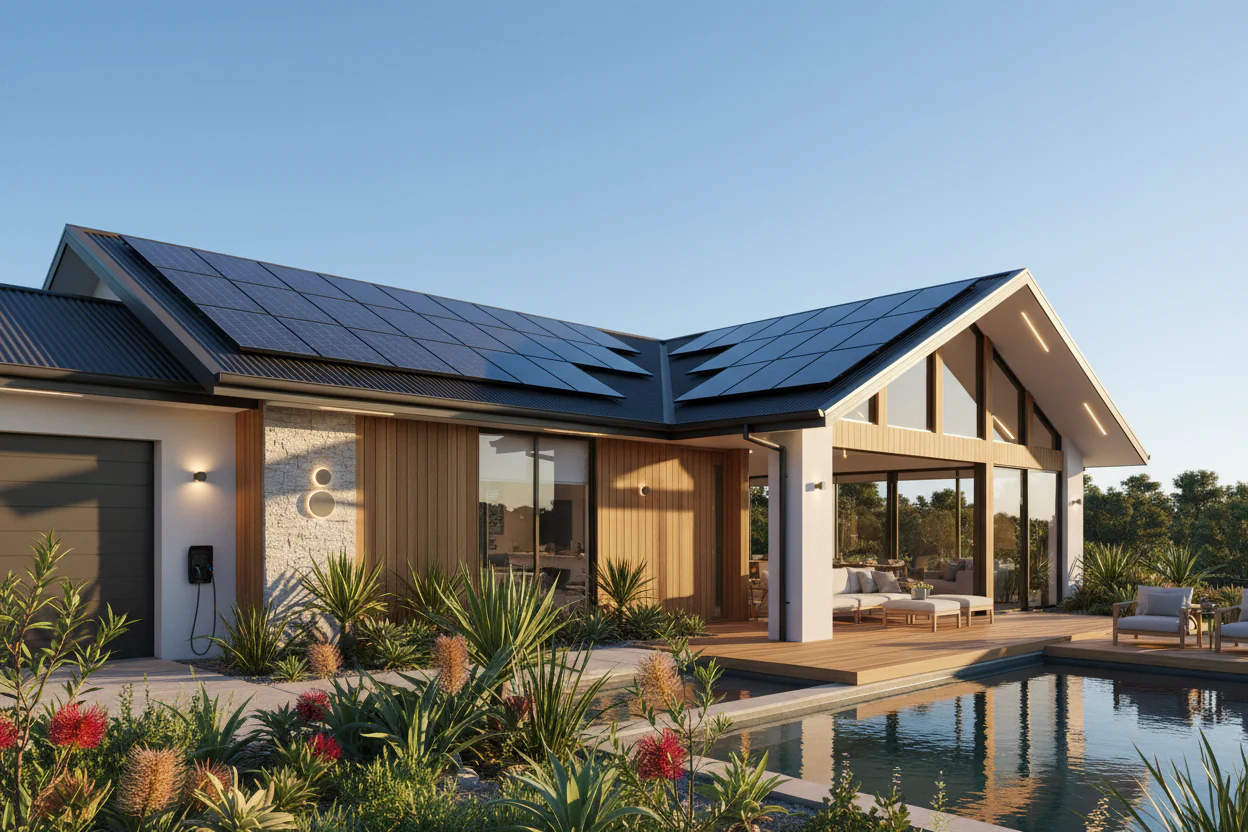
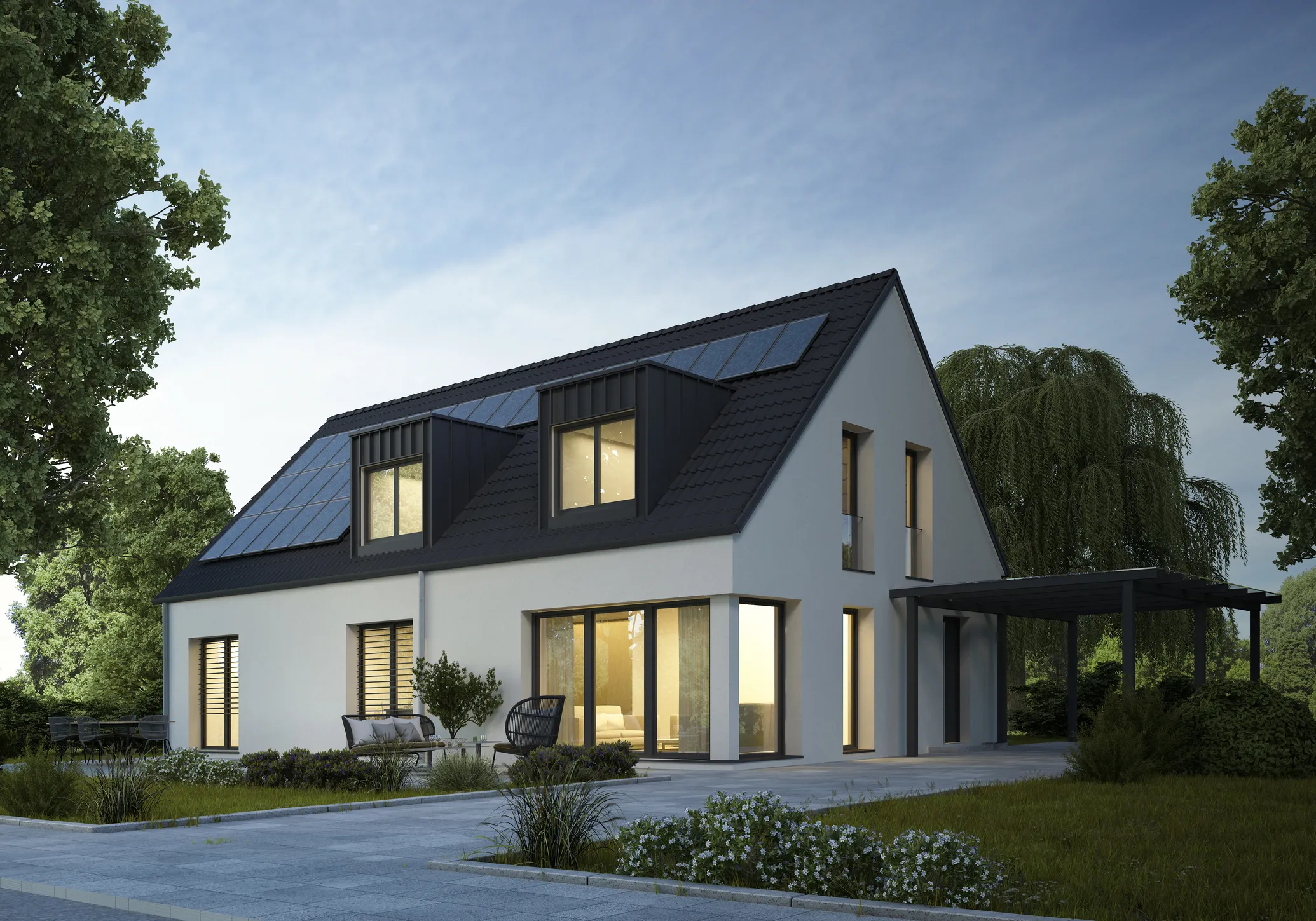
We are currently in the era of institutional-grade operations. Modern villa concepts are designed with built-in technical hardening, regenerative systems, and biological optimization. The focus has shifted from “paying for comfort” to “engineering autonomy.” Modern properties utilize predictive analytics and resource-looping (such as greywater recycling and solar-plus-storage) to lower the baseline cost of existence for the asset.
Conceptual Frameworks and Mental Models
To evaluate potential utility optimization frameworks, we deploy four primary mental models:
1. The “Metabolic Loop” Matrix
This model views the residence as a biological entity that consumes energy and water. Efficiency is found by “Closing the Loop,” turning waste (heat, greywater) back into inputs. A villa that captures its own thermal mass and harvests its own water significantly reduces the “Metabolic Tax” of its operation.
2. The “Thermal Inertia” Framework
This measures the building’s ability to maintain a stable internal temperature without active mechanical intervention. High-fidelity nodes prioritize materials with high thermal mass (stone, rammed earth) and high-performance insulation. The goal is to reduce the “Cycling Frequency” of HVAC systems, which is where the bulk of utility costs are generated.
3. The “Invisibility-to-Impact” Ratio
This metric measures the logistical friction of the efficiency layer. In elite management, operators entirely decouple cost-reduction protocols such as automated load shedding or greywater irrigation from the inhabitant’s daily flow. The inhabitant should feel the stay’s value through the outcome, while the cost-saving process remains invisible.
Key Categories: Hardening the Metabolic Plant
Operational efficiency varies based on the archetype of the property and its environmental context.
| Category | Primary Landscape | Efficiency Vector | Governance Strategy |
| Technical Sanctuary | Urban Infill / Tech Hubs | Load Balancing / IoT | Automated Edge Logic. |
| Regenerative Micro-Estate | Rural / Agricultural | Resource Sovereignty | On-site Loop Management. |
| The Tropical Brutalist | Coastal / Tropics | Thermal Mass / Passive | Circadian Airflow Management. |
| Managed Wildness Lodge | Desert / Alpine | Off-Grid Hardening | Solar-Plus-Storage Redundancy. |
Decision Logic: The “Residency Audit”
Before selecting or developing a property, a stakeholder should rank the asset on a 1–10 scale across technical hardening and metabolic efficiency. A sum below 15 indicates the property will likely face “Cascading Infrastructure Failure,” where minor inefficiencies compound into major fiscal liabilities.
Detailed Real-World Scenarios
The “Peak Load” Arbitrage
A high-fidelity villa in a desert environment faces $4,000 monthly cooling costs during the summer.
-
The Incident: Traditional HVAC units run at 100% capacity during the hottest part of the day, coinciding with peak electricity rates.
-
The Shift: Implementing an ice-storage cooling system that creates thermal mass at night (off-peak) and releases it during the day.
-
Result: Total energy OpEx reduced by 45% without adjusting the internal temperature set-point.
The “Ghost Load” Eradication
An urban villa remains empty for 60 days a year but maintains a $500 monthly “standby” utility bill.
-
The Incident: Always-on electronics, pool pumps running on static timers, and unoptimized water heaters.
-
The Shift: Implementing an “Occupancy State” automation layer that shuts down all non-essential circuits and switches water heaters to “Vacation Mode” via the master occupancy ledger.
-
Result: Reduction of baseline standby costs by 70%.
Planning, Cost, and Resource Dynamics
The economics of boutique management must be calculated through the lens of Total Cost of Residency (TCR). A plan that appears expensive but provides native metabolic yields is mathematically superior to a “cheap” rental with high external dependencies.
Range-Based Operational Investment (Monthly)
| Expense Item | “Standard” Luxury Plan | “High-Fidelity” Hardened Plan |
| Electricity | Grid-Dependent (Variable) | Hybrid / Regenerative (Stabilized) |
| Water | Municipal Only (High Cost) | Harvested / Greywater (Looping) |
| Thermal Maintenance | Corrective (High HVAC Use) | Passive (Insulation/Mass) |
| Management | Reactive (High Overhead) | Predictive (Data-Driven) |
Tools, Strategies, and Support Systems
To operationalize the defense of the villa’s budget, the professional utilizes a “Residency Stack” designed to preempt waste:
-
Smart Load Shedding: Utilizing IoT controllers to temporarily disable high-draw appliances (like pool heaters) when the house enters a peak-load or high-rate window.
-
Variable Speed Pumps: Replacing static pool and well pumps with variable-speed units that consume 80% less energy at lower flow rates.
-
Phase Change Materials (PCM): Integrating materials into the walls or ceiling that absorb heat during the day and release it at night, stabilizing the thermal floor.
-
Circadian Ventilation Logic: Automated window actuators that utilize evening temperature drops to purge hot air from the building naturally.
-
Greywater Diversion Systems: Automatically directing shower and laundry water to garden irrigation, reducing municipal water demand.
-
Point-of-Use Water Heating: Eliminating the “Heat Loss” associated with long pipe runs from a central boiler.
-
Reflective Roof Membranes: Utilizing high-albedo coatings to reduce solar gain in tropical or desert nodes.
-
Predictive Analytics Hub: A centralized server that monitors weather patterns and pre-cools or pre-heats the building based on forecasted solar gain.
Risk Landscape and Failure Modes
-
The “False Economy” Decay: Cutting costs on filtration or HVAC maintenance, leading to the catastrophic failure of $50,000 internal components.
-
Technical Debt: Utilizing “consumer-grade” automation that requires frequent troubleshooting, increasing the labor burden on the house manager.
-
Resource Fragility: Relying on single-source utilities (grid-only) creates a systemic vulnerability, as localized events can disrupt operations and lead to a total loss of property authority.
Governance, Maintenance, and Long-Term Adaptation
A successful villa plan requires active “Metabolic Governance.” One of the common errors in property stewardship is treating utility reduction as a one-time setup rather than a repeating cycle of adaptation.
-
The Quarterly “Envelope” Audit: Inspecting door seals, window gaskets, and insulation for “thermal leaks” that increase the metabolic tax of the building.
-
Monthly Sensor Calibration: Ensuring that the IoT devices managing the house logic are reporting accurate temperature and humidity data.
-
Governance Checklist:
-
[ ] HVAC filters cleaned/replaced.
-
[ ] Solar array efficiency verified.
-
[ ] Irrigation schedules adjusted for seasonal evaporation rates.
-
[ ] Standby “Ghost Loads” audited via circuit monitoring.
-
Measurement, Tracking, and Evaluation
-
Leading Indicators: Real-time energy consumption (kWh) per occupancy day; humidity stability; HVAC cycling frequency.
-
Lagging Indicators: Total utility bill as a percentage of OpEx; mean time between system failures; occupant comfort scores.
-
Documentation Example: The “Systemic Provenance” Log. A digital record of all professional interventions and efficiency upgrades that serves as a value-add during asset divestment.
Common Misconceptions and Oversimplifications
-
Myth: Smart thermostats are enough. Correction: A thermostat only manages the demand; it does nothing to address the structural supply of heat or cold.
-
Myth: Solar panels solve all energy issues. Correction: Solar is an active supply; without passive efficiency (insulation/mass), the array must be oversized and expensive.
-
Myth: Low-flow fixtures ruin the luxury experience. Correction: High-end pressure-compensated fixtures provide a superior sensory experience while using 40% less water.
-
Myth: Pools are the highest cost. Correction: HVAC and water heating typically account for 60-70% of a villa’s utility load; pool pumps are secondary if managed with variable speeds.
-
Myth: Automation is too expensive for old villas. Correction: Wireless IoT retrofitting has a typical ROI of 18-24 months in high-utility environments.
-
Myth: Luxury means high consumption. Correction: In 2026, luxury is “Precision.” Consuming only exactly what is needed to maintain the sanctuary baseline.
Ethical and Practical Considerations
The rise of the “Sovereign Node” brings a responsibility to the local human and environmental ecosystem. A utility strategy that relies on depleting communal water tables or straining local grids without contributing back is unsustainable. The most resilient strategies are those that practice “Radical Transparency” utilizing regenerative systems and ensuring that the presence of the villa does not create a “Utility Shadow” over the local community. This enhances the resident’s long-term security and the asset’s standing in its geographic context.
Conclusion: The Sovereign Node
Technical rigor and metabolic stewardship build the architecture of a successful life in 2026. The ability to select the right environment and manage its resource footprint with surgical efficiency is no longer merely a lifestyle choice; it is a critical skill for the modern high-output professional. By moving from a “homeowner” mindset to a “systemic governor” mindset, the resident ensures that their environment acts as a catalyst for their authority. In an increasingly noisy world, the hardened, resource-efficient villa is the ultimate firewall.