How to Avoid Villa Security Risks: The 2026 Operational Pillar
The contemporary maturation of the luxury residential market has moved beyond the era of aesthetic surplus toward a period of functional specificity. For the sovereign traveler, the high-output professional, or the institutional investor, the traditional markers of luxury marble finishes, infinity pools, and high staff-to-guest ratios are increasingly viewed as baseline commodities rather than competitive advantages. In their place, a new hierarchy of value has emerged, centered on “Operational Fidelity.” A villa is no longer merely a dwelling; it is an engineered node designed to facilitate specific psychological and physiological outcomes through the rigorous management of the physical, digital, and human environment.
Identifying and executing the most resilient strategies for these properties requires moving beyond the “gated community” vernacular. We are witnessing the professionalization of private space, where the distinction between a high-end hotel and a private estate is blurred by the quality of the technical hardening and the reliability of the security infrastructure. For the senior strategist or the property steward, the selection of a protective framework is a high-stakes decision that dictates the asset’s long-term authority and fiscal viability in an increasingly complex global marketplace.
As we move through 2026, the success of these assets is increasingly defined by systemic integrity, the degree to which the spatial configuration, technical failovers, and surveillance protocols align to produce a frictionless environment. This transition marks the end of the “barbed-wire” era, replaced by an era of structural utility, where the success of a dwelling is measured by its capacity for environmental hardening and data sovereignty. This editorial analysis deconstructs the mechanics of elite property administration, specifically focusing on the elimination of vulnerabilities that compromise the promise of a private sanctuary.
Understanding “how to avoid villa security risks.s”

To effectively execute the protocols of how to avoid villa security risks, one must first dismantle the “Fortress Fallacy.” In commodity real estate marketing, security is often presented as a simple chronological list of hardware cameras, locks, and alarms. However, in the high-resolution luxury market, security is actually a complex service-level agreement between the inhabitant and the physical asset. It encompasses the metabolic efficiency of the house, the technical uptime of the property’s data firewalls, and the logistical invisibility of the protective layer.
A multi-perspective explanation reveals that the most effective environments are those that treat the building as a high-resolution node. This involves the strategic management of sensors and staff to create a “Hardened Sanctuary.” Misunderstandings often arise when stakeholders confuse “obvious deterrence” with “effective defense.” Obvious deterrents,ce such as visible armed guards, rds can often attract the very attention a resident seeks to avoid. Effective defense is often invisible, integrated into the architecture through reinforced glazing, acoustic monitoring, and encrypted communication channels.
Oversimplification risks manifest in the focus on superficial aesthetics over the “Yield-per-Threat.” A boutique villa is a specialized node; its value is not in being broadly popular, but in providing a perfect environment for the specific demographic it was designed to serve. By prioritizing the “Friction-to-Focus” design,elta ensuring that the mechanics of the security process do not distract from the inhabitant’s primary work or rest, over tim,e these administrative strategies ensure the asset acts as a multiplier for the occupant’s performance rather than a source of environmental anxiety.
Deep Contextual Background: The Evolution of Managed Privacy
The trajectory of private estate defense has moved through three distinct evolutionary phases that define the current high-fidelity landscape.
Phase 1: The Aristocratic Legacy (Pre-2010)
Initially, the villa was an exercise in static authority. Security was defined by physical distance and large, visible staff. These buildings were high-friction environments, requiring constant, reactive financial injections to maintain basic safety. Luxury was defined by the willingness to absorb high, unoptimized overhead. The primary failure mode was internal: social engineering or “insider threats” facilitated by the lack of formal vetting and protocol-driven management.
Phase 2: The Connected Disruption (2011–2022)
The rise of the Internet of Things (IoT) introduced professionalized convenience but also systemic “Digital Depreciation.” This era focused on the visual narrative, smart home automation,n and remote camera access. However, the physical operations often remained porous, as off-the-shelf consumer cameras and cloud-dependent devices introduced new vectors for digital intrusion. Security became a marketing feature rather than a technical hardening protocol.
Phase 3: Systemic Sovereignty (2023–Present)
We are currently in the era of institutional-grade operations. Modern villa concepts are designed with built-in technical hardening, edge-computing automation, and biological optimization. The focus has shifted from “performing security” to “managing a high-performance node.” Modern properties include specific protocols for network redundancy, biometric access, and “Safe Room” integration that is indistinguishable from the luxury finish.
Conceptual Frameworks and Mental Models
To evaluate potential defensive failures, we deploy four primary mental models:
1. The “Concentric Circles o.Defense”
This model views the residence as a series of nested perimeters. The goal is “Depth of Defense,” where a breach in the outer layer (the perimeter fence) does not compromise the core (the primary suite). Each layer is designed to buy time for a protocol-driven response.
2. The “Invisibility-to-Impact” Ratio
This measures the logistical friction of the security layer. In elite management, the staff and surveillance paths are entirely decoupled finhabitants’bitant’s primary circulation routes. The operation of the house should be felt in the outcome of total peace, but the process should remain invisible to the inhabitant.
3. The “OODA Loop” (Observe, Orient, Decide, Act)
Originally a military strategy, this model reduces the latency between a sensor trip (Observe) and a technical or physical response (Act). A high-fidelity node utilizes automated scripts such as locking all internal doors and killing exterior light,s to execute the “Act” phase faster than a human intruder can adapt.
Key Categories: Hardening the Physical and Digital Plant
Security management is not a monolith; it varies based on the archetype of the property and its environmental context.
| Category | Primary Landscape | Governance Strategy | Fiscal Trade-off |
| Technical Sanctuary | Urban Infill / Hubs | Hardened Network; Localized Edge Automation. | High Initial CapEx; Low OpEx. |
| Regenerative Micro-Estate | Rural / Agricultural | Human Perimeter; Resource Sovereignty. | High Logistical Complexity. |
| Managed Wildness Lodge | Desert / Alpine | Satellite Stealth; Signal Jamming Protocols. | Response-time fragility. |
| Heritage Refurbishment | European Historic Cores | Acoustic Retrofitting; Physical Hardening. | High Bespoke Repair Costs. |
Decision Logic: The “Residency Audit”
Before selecting or developing a property, a stakeholder should rank the asset on a 1–10 scale across technical hardening and logistical invisibility. A sum below 22 indicates the property will likely face “Cascading Infrastructure Failure” during a security event, where minor inefficiencies compound into major liabilities.
Detailed Real-World Scenarios
The “Smart Home” Telemetry Breach
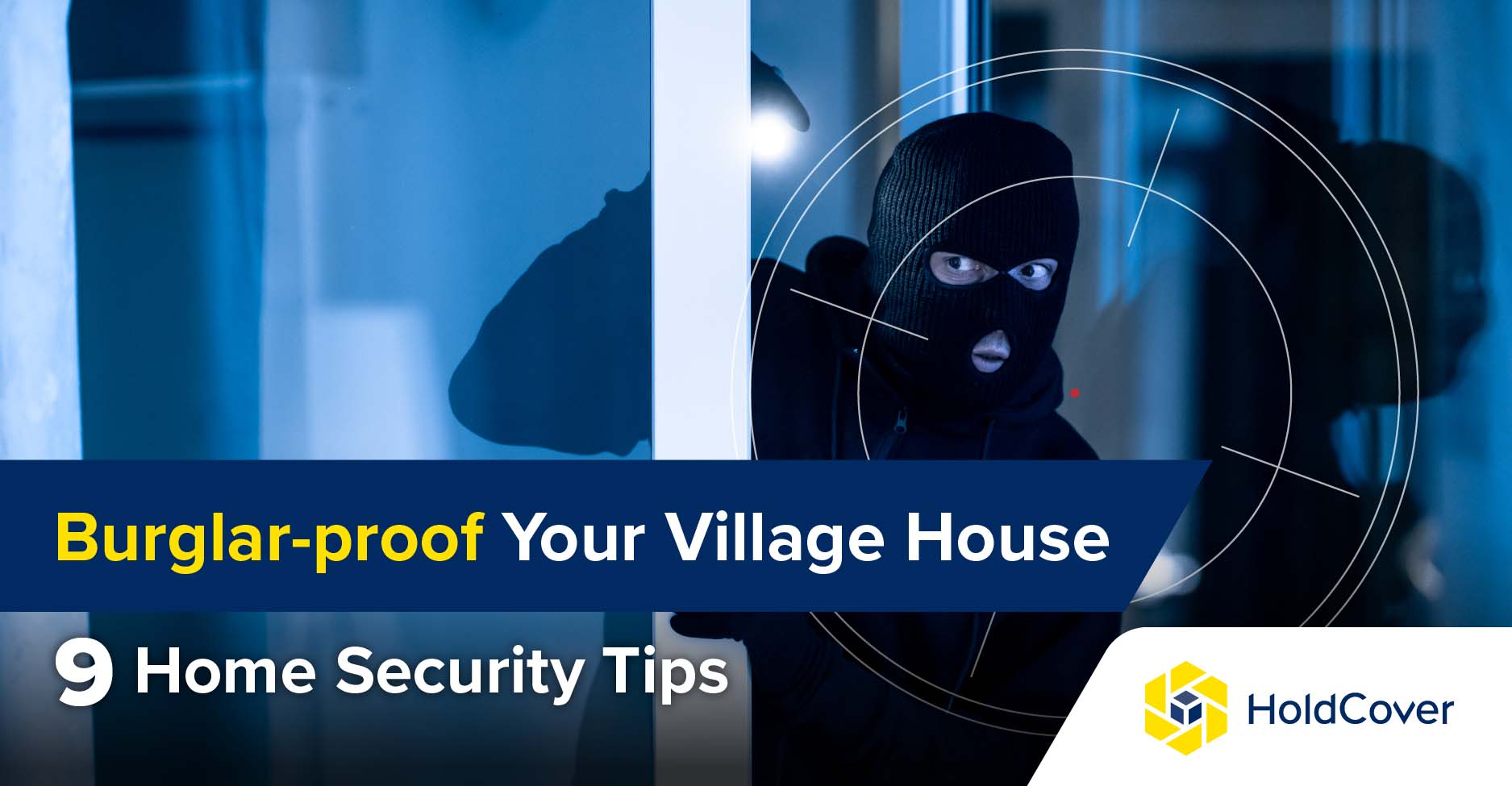
A high-fidelity urban villa utilizes an off-the-shelf consumer camera system.
-
The Incident: An external actor gains access to the cloud server and maps the resident’s daily routine via stored camera feeds.
-
Failure Point: The system relies on third-party cloud servers for sensitive data.
-
Result: Digital vulnerabilities compromise physical security.
-
Correction: Operators implement NVR (Network Video Recorder) systems that air-gap the data from the external internet.
The “Social Engineering” Incursion
An individual seeking information on a high-net-worth resident’s schedule befriends a villa staff member.
-
The Incident: A staff member shares information about a weekend departure within a seemingly casual social context.
-
Failure Point: The management failed to provide “Operational Security” (OPSEC) training for auxiliary staff.
-
Result: Intruders execute a targeted robbery during the resident’s absence.
-
Logic: Human vetting serves as the primary layer of defense; leadership must hard-code protocols into the staff contract.
Planning, Cost, and Resource Dynamics
Strategists must calculate the economics of boutique security through the lens of Total Cost of Residency (TCR). A plan that appears expensive, ve such as a 24/7 on-site manager,g er is mathematically superior to a “cheap” alarm system that fails during a power outage.
Range-Based Security Investment (Monthly)
| Expense Item | “Standard” Luxury Plan | “High-Fidelity” Hardened Plan |
| Technical Stack | Cloud Cameras / Wi-Fi Locks | Local NVR / POE Hardwired Sensors |
| Monitoring | Remote Call Center | Dedicated On-site or Local Response |
| Hardening | Standard Glass / Wood Doors | Ballistic Glazing / Steel-Core Doors |
| Digital | Public ISP / Basic VPN | SD-WAN / Network Slicing / Encrypted Comms |
Tools, Strategies, and Support Systems
To operationalize the defense of the sanctuary, the professional utilizes a “Residency Stack” designed to preempt threats:
-
VLAN Segmentation: The system segregates the guest network from the house automation network to prevent lateral digital movement.
-
Environmental Monitoring (IoT): Sensors track acoustic levels in real-time to detect “non-standard” vibrations, such as drilling or glass breaking, before an alarm trips.
-
Encrypted Staff Comms: Utilizes hardened messaging apps to coordinate logistics without creating interceptable radio noise.
-
Physical Shielding: Operators apply RF-blocking paints in designated “Sovereign Zones” to prevent external signal interception.
-
Biometric Access Control: Biometric systems eliminate physical keys or PINs that unauthorized parties could lose, steal, or share.
-
Decoupled Service Paths: Architectural blueprints ensure that staff never cross the resident’s line of sight during standard maintenance.
-
Redundant Power Failover: Secondary power systems ensure that the “OODA Loop” continues to function even if an external actor sabotages the primary grid.
Risk Landscape and Failure Modes
-
The “Social Friction” Overhang: When attempting to build personal rapport with a resident, violating the professional distance required for security protocols.
-
The Software Supply Chain: Vulnerabilities in the property management software that could expose guest details to external actors.
-
Technical Debt: Utilizing “consumer-grade” automation that requires frequent troubleshooting, increasing the labor bu,rden and reducing uptime.
-
The “Grey Swan” Event: A localized political or environmental collapse that renders standard police or medical response times irrelevant.
Governance, Maintenance, and Long-Term Adaptation
A successful villa plan requires active “Residential Governance.” One of the common errors in property stewardship is treating security as a one-time setup rather than a repeating cycle of adaptation.
-
The 48-Hour Onboarding Stress-Test: Testing the staff’s response to a simulated breach or medical emergency at a random interval.
-
Quarterly Hardware Refresh: Auditing all physical locks and sensor batteries to ensure zero-point failure.
-
Governance Checklist:
-
Verify Network Slicing integrity.
-
Confirm secondary power failover uptime.
-
Review staff OPSEC compliance logs.
-
Test biometric sensor sensitivity in low-light conditions.
-
Measurement, Tracking, and Evaluation
-
Leading Indicators: Daily sensor-driven uptime; frequency of unauthorized access alerts; staff protocol adherence scores.
-
Lagging Indicators: Total incident o count relocation expenses, and data breach history.
-
Documentation Example: The “Sovereign Node” Ledger. A digital record of all security interventions and protocol adjustments that serves as a value-add during asset divestment.
Common Misconceptions and Oversimplifications
-
Myth: Visible cameras are the best deterrent. Correction: Visible cameras only tell an intruder where the “blind spots” are. Comprehensive coverage requires a mix of overt and covert sensors.
-
Myth: Gated communities are inherently safe. Correction: Gated communities create a “False Sense of Sovereignty,” often lacking the internal hardening required for high-net-worth protection.
-
Myth: Security is a luxury add-on. Correction: In 2026, security is the structural baseline of the asset’s utility.
-
Myth: Armed guards solve everything. Correction: Guards are a human layer; without a technical “OODA Loop,” they are vulnerable to the same social engineering as other staff.
-
Myth: My information isn’t valuable. Correction: For the boutique traveler, data, including location and routine,e is the primary target of modern reconnaissance.
Ethical and Practical Considerations
In the pursuit of absolute sanctuary, there is a risk of creating “Operational Isolation.” The ethical property steward must balance the resident’s need for security with the staff’s need for a safe, dignified work environment. A villa that resembles a prison is a failure of architecture. Operators pursue ‘Hardened Biophil,ia’ an environment that feels open and connected to nature while maintaining an absolute and uncompromising technical perimeter. This requires a commitment to “Radical Transparency” with stakeholders while maintaining “Systemic Invisibility” for the inhabitant.
Conclusion: The Sovereign Node
The architecture of a successful life in 2026 is built on the pillars of technical rigor and contextual stewardship. The ability to select the right environment and manage its security perimeters with surgical efficiency is no longer merely a lifestyle choice; it is a critical skill for the modern high-output professional. By moving from a “guest” mindset to a “systemic governor” mindset, the resident ensures that their environment acts as a catalyst for their authority. In an increasingly noisy and observed world, the hardened villa is the ultimate firewall.