Top Coastal Villas in America: The 2026 Guide to Maritime Fidelity
The contemporary maturation of the luxury residential market has moved beyond the era of aesthetic surplus toward a period of functional specificity, particularly within the littoral zone. For the sovereign traveler, the high-output professional, or the institutional investor, traditional markers of coastal luxury such as floor-to-ceiling glass, infinity pools, and proximity to private beaches now function as baseline commodities rather than competitive advantages. In their place, a new hierarchy of value has emerged, centered on “Operational Fidelity.” A villa no longer exists merely as a dwelling; it operates as an engineered node that facilitates specific psychological and physiological outcomes through the rigorous management of a volatile physical environment.
Identifying and executing resilient strategies for these properties requires that we move beyond the “vacation rental” vernacular. We are witnessing the professionalization of private space, where the quality of technical hardening and the security of the infrastructure blur the distinction between high-end hotels and private estates. For the senior strategist or the property steward, the selection of an administrative framework for a coastal asset represents a high-stakes decision that dictates long-term authority and fiscal viability in an increasingly complex environmental and regulatory marketplace.
As we move through 2026, systemic integrity increasingly defines the success of these occupancies, specifically, the degree to which spatial configuration, technical failovers, and corrosive-mitigation protocols align to produce a frictionless environment. This transition marks the end of the “amenity-heavy” era, replacing it with an era of structural utility, where the capacity for environmental hardening and cognitive recovery measures the success of a dwelling. This editorial analysis deconstructs the mechanics of elite coastal property administration and identifies the points of failure that compromise the promise of a private maritime sanctuary.
Understanding “top coastal villas in america”
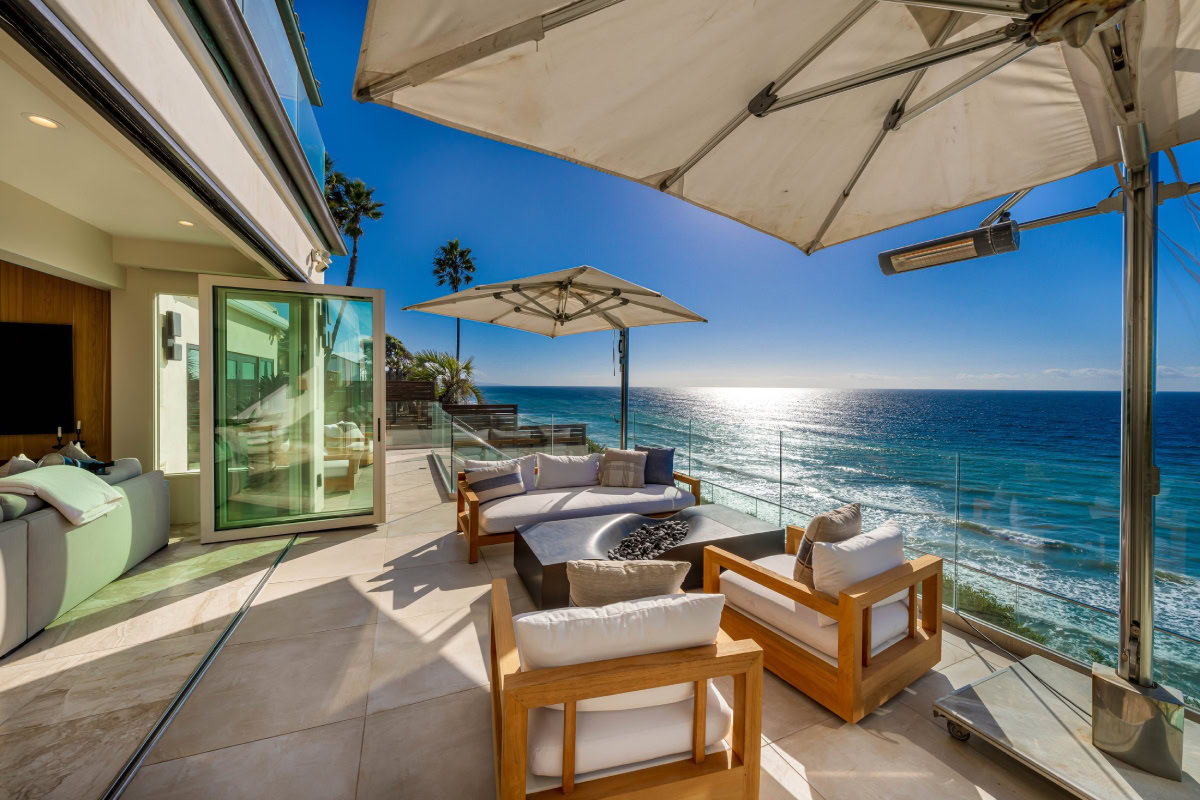
To grasp the full scope of the top coastal villas in America, one must view the modern shoreline estate not as a collection of rooms, but as a metabolic system operating at the edge of chaos. At its core, the term represents the strategic alignment of physical assets with specific performance outcomes in high-salinity, high-energy environments. In commodity real estate marketing, administrators frequently present coastal properties as static assets. However, true optimization requires a radical departure from this view, acknowledging that a villa on the water is a dynamic battle against entropic decay.
A multi-perspective explanation reveals that while the primary goal remains the preservation of the asset’s value, the secondary and tertiary goals involve the “Invisible Operation.” In elite coastal management, administrators entirely decouple maintenance protocols such as desalization of HVAC coils or structural vibration monitoring from the inhabitants’ daily flow. The inhabitant should feel the value of the stay in the cognitive “uptime” it provides, while the rigorous battle against salt-air intrusion remains invisible. This creates a psychological buffer, allowing the high-net-worth individual or the specialized team to operate without the cognitive drag of coastal logistics.
Common misunderstandings often conflate “coastal” with “beachfront.” In the context of high-fidelity assets, a coastal villa may be situated on a bluff, a salt marsh, or a rocky outcrop, each requiring vastly different engineering responses. Oversimplification risks are highest when stakeholders prioritize short-term aesthetic appeal over long-term structural utility. A score below 22 in our systemic audit signals that a property requires significant “Operational Capital” before a steward can certify it as a secure sovereign node. Ignoring these signals often leads to “Technical Debt” utilizing non-specialized labor for maritime systems, which forces owners to repay that debt later at a 3x premium following a storm event or system failure.
The Actuarial Evolution of the Maritime Estate
The trajectory of the high-end American coastal villa has shifted from a display of overt labor to an exercise in technical concealment. In the mid-twentieth century, the presence of numerous staff signaled status; today, the absence of visible staff, combined with the presence of flawless service and automated climate control, signals true authority. This evolution mirrors the transition from “Trust-Based Systems” to “Protocol-Based Systems.”
Historically, coastal property owners in domestic markets relied on the individual loyalty of a local caretaker. While effective in a simpler era, this model possessed a single point of failure. If the individual lacked technical knowledge of modern desalination or smart-glass systems, the asset suffered. The modern era demands a “Decentralized Stewardship” model. Here, the knowledge is embedded in the software, the sensors, and the redundant protocols of the property itself. This shift ensures that the asset remains a high-performance node regardless of personnel turnover.
Systemic hardening now includes digital sovereignty alongside physical resilience. As coastal residences integrate complex automation for storm shutters and flood defenses, they become targets for digital intrusion. The contemporary coastal estate must therefore incorporate a “Technical Firewall” alongside its hurricane-rated glazing. We no longer underwrite coastal property based on sea-level rise projections alone; we underwrite based on the metabolic health of the building’s internal systems, its power redundancy, its moisture-intrusion integrity, and its cybersecurity posture in isolated environments.
Conceptual Frameworks for Shoreline Sovereignty
To navigate the complexity of high-fidelity coastal residency, stewards should employ specific mental models that prioritize systemic resilience over aesthetic vanity.
1. The “Corrosive Metabolism” Model
This framework treats the house as an organism in a hostile environment. Salt air and humidity are not just weather conditions; they are constant inputs that the house must process. When a system is “unhealthy,” it fails to mitigate these inputs, leading to accelerated decay. Optimization involves identifying the “clogged arteries” of the operation, no matter whether it is an improperly drained balcony or an HVAC system without specialized coastal coatings.
2. The “Storm-Horizon” Theory
The success of a coastal managed environment is measured by its “Return-to-Utility” time following a major weather event. A property that looks beautiful but takes six months to repair after a Category 3 hurricane has failed. High-fidelity management seeks to implement systems such as on-site material reserves and modular mechanical syst, ems that minimize this recovery window.
3. The “Amphibious” Redundancy Rule
Borrowed from naval engineering, this model dictates that for every critical system exposed to the elements, there must be an internal, protected backup. This prevents the “Cascading Failure” scenario where a single breached window leads to the loss of the central server room or the electrical grid.
Categorical Variations: Hardening the Littoral Plant
Optimization requires recognizing that coastal assets belong to distinct archetypes, each requiring unique hardening strategies and maintenance cadences.
| Category | Primary Landscape | Primary Risk Vector | Hardening Priority |
| Pacific Bluff Sanctuary | High Elevation/Cliffs | Erosion/Seismic | Geotechnical Anchors; Drainage |
| Barrier Island Estate | Low Elevation/Sand | Storm Surge/Washover | Pilings; Hydrostatic Vents |
| Atlantic Sound Villa | Estuary/Marsh | Humidity/Bugs | Vapor Barriers; Insect Defenses |
| Tropical Brutalist | Coastal/Tropics | Heat/Wind | Thermal Mass; Ballistic Glazing |
| Northeast Cape Manor | Rocky Shore/Cold | Freeze-Thaw/Ice | Salt-Resistant Masonry; Insulation |
Realistic Decision Logic
Before selecting a procurement or management framework, the property steward must rank the asset on a 1–10 scale across technical hardening and metabolic efficiency. A sum below 22 signals that a property requires significant “Operational Capital” before a steward can certify it as a secure sovereign node. Performance assets require 40% higher operational budgets to maintain the same level of integrity, as the maritime-induced wear-and-tear accelerates the decay of high-fidelity systems.
Detailed Scenarios: Operational Failure and Recovery
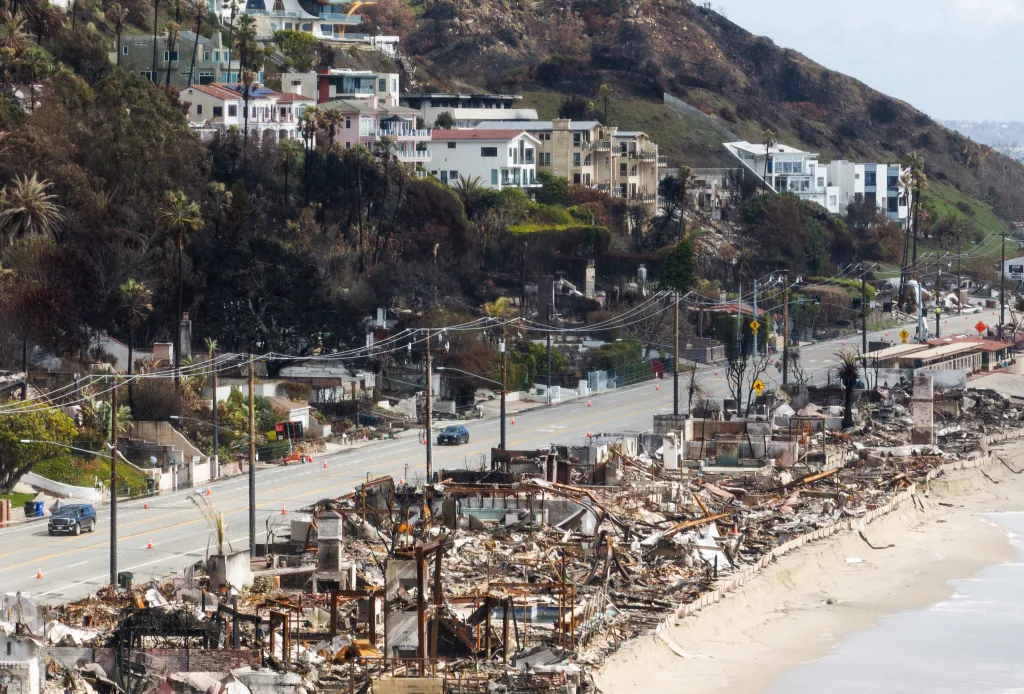
The “Invisible” Vapor Breach
A high-resolution villa in the Hamptons experienced a slow failure of the sub-slab vapor barrier.
-
The Failure: The property utilized a traditional “aesthetic-first” inspection model. The moisture intrusion remained undetected behind custom cabinetry for two seasons.
-
The Consequence: Micro-fungal growth required a $250,000 remediation of the primary suite and a sharp increase in environmental liability insurance.
-
The Correction: Installing real-time interstitial wall sensors that monitor humidity levels. The system would have alerted the steward to the breach within hours, reducing the cost to a localized patch.
The “Hurricane-Proof” Fallacy
An estate in the Florida Keys relied solely on “hurricane-rated” windows without redundant power for the shutter system.
-
The Failure: A storm surge disabled the ground-level transfer switch before the motorized shutters could be fully deployed.
-
The Incident: Flying debris shattered a secondary window, allowing wind-driven rain to enter pressurizeized the interior, blowing out a section of the roof.
-
The Second-Order Effect: The loss of structural integrity rendered the property unusable for eighteen months during a period of peak rental demand.
-
The Correction: Implementing a gravity-fail-safe shutter system and elevating all critical electrical switchgear to a “Hardened Mezzanine” above the surge line.
Planning, Cost, and Resource Dynamics
The economics of high-fidelity coastal maintenance are oftcounterintuitiveive. Reducing the “Sticker Price” of a service often increases the “Total Cost of Ownership” (TCO). In elite maritime management, administrators entirely decouple cost-saving protocols such as bulk procurement of specialized coatings from the inhabitant’s daily flow.
Range-Based Insurance and Maintenance Investment (Monthly)
| Expense Item | “Standard” Coastal Plan | “High-Fidelity” Hardened Plan |
| Insurance Premium | Market Average (High Deductible) | Negotiated (Risk-Mitigated) |
| Corrosion Mitigation | Reactive (Repaint on Failure) | Predictive (Scheduled Washing) |
| HVAC Lifecycle | 7–10 Years (Standard Units) | 12–15 Years (Coastal Spec) |
| Human Capital | Local Handyman (Generalist) | Maritime Specialist (Contract) |
The “High-Fidelity” plan appears significantly more expensive on paper, yet it prevents the “Black Swan” events that can cost millions in uninsured losses. In the professionalization of private coastal space, capital acts as a tool for risk-aversion, not just luxury.
Tools, Strategies, and Support Systems
-
Impressed Current Cathodic Protection (ICCP): Utilizing low-voltage electrical currents to prevent corrosion in steel-reinforced concrete pilings.
-
Sacrificial Anodes: Regularly replaced zinc or aluminum plates that corrode instead of the villa’s primary structural hardware.
-
Hydrostatic Relief Valves: Systems that allow floodwaters to pass through a structure’s foundation without compromising its structural integrity.
-
Predictive Corrosion Modeling: Software that uses local weather data and salinity sensors to predict exactly when mechanical components will fail.
-
Desalination on Flushing Systems: Automated exterior sprayers that rinse the building envelope with fresh water after high-wind events.
-
Sovereign Satellite Nodes: Redundant, hardened communication arrays that maintain high-bandwidth connectivity when terrestrial lines are severed.
-
Digital Environmental Twins: Maintaining a real-time 3D model of the villa’s moisture and thermal envelope to troubleshoot breaches remotely.
-
On-Site Component Vaults: Maintaining a critical inventory of glass panels, mechanical parts, and specialized fasteners to bypass supply chain delays.
Risk Landscape and Failure Modes
The most dangerous risk in elite coastal property management is “Compounding Fragility.” This occurs when multiple minor environmental stressors fail simultaneously, overwhelming the management layer. For example, a minor power surge might disable the fresh-water rinse system, which leads to salt accumulation, which then causes a short-circuit in the exterior security cameras.
A systemic approach requires a “Taxonomy of Coastal Risk.” We categorize risks into:
-
Terminal Risks: Dune breach, foundation scour, total structural loss.
-
Operational Risks: Lift failure, HVAC icing, localized flooding of mechanical rooms.
-
Frictional Risks: Pitting of hardware, salt-fogging of glass, and minor sand intrusion.
The goal of the coastal steward is to ensure that no Frictional Risk ever compounds into an Operational or Terminal Risk.
Governance, Maintenance, and Long-Term Adaptation
A coastal villa is a dynamic asset that requires a “Living Document” of governance. This document must survive both the owner and the manager, providing a roadmap for adaptation to a changing shoreline.
-
Biannual Salinity Audits: Measuring the salt accumulation on internal and external surfaces to adjust cleaning cadences.
-
Seawall/Bluff Stability Reviews: Hiring geotechnical engineers to assess the “Sacrificial Buffer” between the structure and the water.
-
The 20-Year Horizon Plan: Anticipating the need for foundation elevation or seawall reinforcement and building the necessary capital reserves today.
Governance means treating the coastal property as a maritime vessel with its own logbooks, its own dry-dock cycles, and its own long-term strategy for seaworthiness.
Measurement, Tracking, and Evaluation
How do we measure the success of an invisible coastal operation? We look at “Leading Indicators” rather than “Lagging Indicators.”
-
Leading Indicator: 100% adherence to the fresh-water rinse schedule following any wind event over 25 mph.
-
Lagging Indicator: The air conditioner didn’t fail this summer. This is often luck, not management.
-
Qualitative Signal: The inhabitant reports zero “maritime odor” (mold/mildew) during high-humidity cycles.
-
Quantitative Signal: The “Mean Time Between Failures” (MTBF) for exterior lighting and hardware is increasing.
Documentation examples include the “Salinity Log,” a digital record of surface salt levels and the corresponding cleaning responses.
Common Misconceptions and Oversimplifications
-
Myth: Stainless steel doesn’t rust. Correction: In high-salinity environments, even 316-grade stainless steel will tea-stain and pit without regular fresh-water rinsing.
-
Myth: Being “out of the flood zone” means you are safe. Correction: Wind-driven rain and salt fog can cause as much damage as standing water if the building envelope is not hardened.
-
Myth: Impact glass is just for hurricanes. Correction: High-fidelity glass also provides essential acoustic insulation against the constant roar of the surf, reducing cognitive fatigue.
-
Myth: Local contractors know best. Correction: Traditional local methods often prioritize “easy to fix” over “engineered to last,” creating a cycle of constant minor repairs.
-
Myth: Seawalls provide absolute protection. Correction: Seawalls can actually accelerate beach erosion and scour at the base of the structure if not part of a larger ecological strategy.
-
Myth: High-fidelity management is just about cleaning. Correction: Property owners create “Technical Debt” when they employ non-specialized labor for maritime systems, which eventually forces them to repay that debt later at a 3x premium.
Ethical and Practical Considerations
The development and maintenance of high-fidelity coastal villas bring a responsibility to the local maritime ecosystem. A villa that operates as a hardened, impervious island can inadvertently damage adjacent properties by redirecting floodwaters or blocking natural sand migration. The most resilient efficiency strategies practice “Ecological Integration,” utilizing living shorelines and permeable surfaces to reduce the property’s impact on the very environment that gives it value.
Furthermore, we must consider the human capital involved. The most effective coastal stewards are those who are treated as professional maritime technicians rather than housekeepers. Investing in specialized training for staff regarding salt-air mitigation and storm protocols creates a “Knowledge Firewall” that is far more effective than any physical barrier.
Conclusion: The Sovereign Coastal Node
The architecture of the maritime residential market has shifted permanently toward the “Sovereign Node.” Success in this field no longer depends on the breadth of the view or the proximity to the tide line. It depends on the integrity of the underlying systems, the metabolic health of the building, the digital sovereignty of the network, and the resilience of the maintenance protocols.
By applying the principles of high-fidelity stewardship, the modern coastal resident moves beyond the era of reactive repair into an era of structural utility. The goal is not merely to own a home by the sea, but to govern a resilient environment that facilitates human performance and psychological recovery in the face of nature’s most volatile forces. In an increasingly uncertain environmental landscape, the well-managed coastal villa is the ultimate firewall,l a sanctuary where the complexities of the maritime world are managed so effectively that they become, quite literally, invisible.