Best Mountain Villas United States: The 2026 Guide to Alpine Fidelity
The contemporary maturation of the luxury residential market has moved beyond the era of aesthetic surplus toward a period of functional specificity, particularly within the vertical landscapes of the American interior. For the sovereign traveler, the high-output professional, or the institutional investor, traditional markers of mountain luxury such as timber-frame ceilings, sweeping panoramic views, and proximity to ski lift access now function as baseline commodities rather than competitive advantages. In their place, a new hierarchy of value has emerged, centered on “Operational Fidelity.” A villa no longer exists merely as a dwelling; it operates as an engineered node that facilitates specific psychological and physiological outcomes through the rigorous management of a volatile, high-altitude environment.
Identifying and executing resilient strategies for these properties requires moving beyond the “vacation rental” vernacular. We are witnessing the professionalization of private space, where the quality of technical hardening and the security of the infrastructure blur the distinction between high-end hotels and private estates. For the senior strategist or the property steward, the selection of an administrative framework for a mountain asset represents a high-stakes decision that dictates long-term authority and fiscal viability in a landscape defined by extreme temperature swings, wildfire volatility, and topographical isolation.
As we move through 2026, systemic integrity increasingly defines the success of these occupancies, specifically, the degree to which spatial configuration, technical failovers, and snow-mitigation protocols align to produce a frictionless environment. This transition marks the end of the “amenity-heavy” era, replacing it with an era of structural utility, where the capacity for environmental hardening and cognitive recovery measures the success of a dwelling. This editorial analysis deconstructs the mechanics of elite mountain property administration and identifies the points of failure that compromise the promise of an elevated sanctuary.
Understanding “best mountain villas United States.”
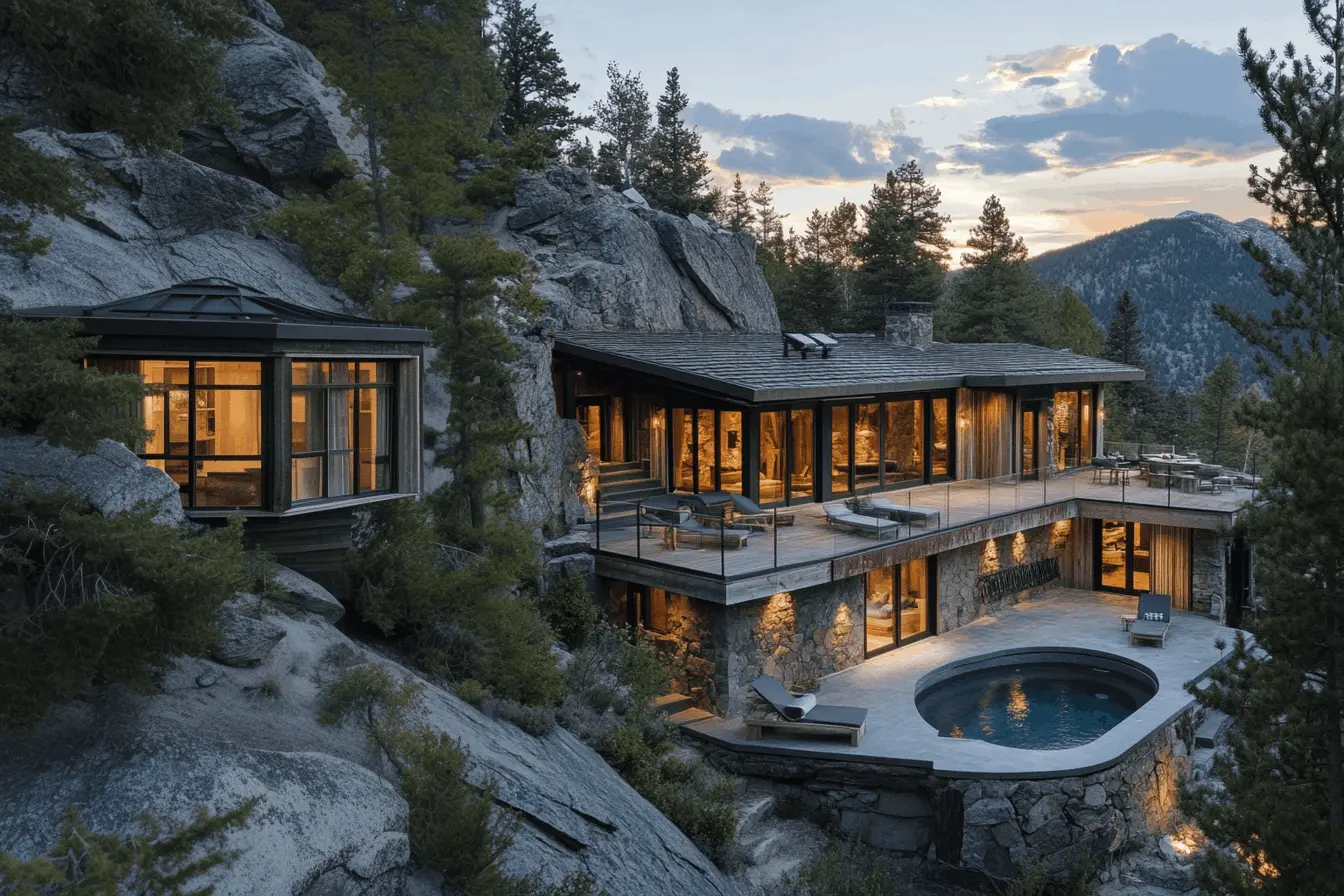
To grasp the full scope of the best mountain villas in the United States, one must view the modern alpine estate not as a collection of rooms, but as a metabolic system operating in a state of constant environmental resistance. At its core, the term represents the strategic alignment of physical assets with specific performance outcomes in high-altitude, low-oxygen, and high-UV environments. In commodity real estate marketing, administrators frequently present mountain properties as static “getaways.” However, true optimization requires a radical departure from this view, acknowledging that an alpine villa is a dynamic laboratory of resilience.
A multi-perspective explanation reveals that while the primary goal remains the preservation of the asset’s value, the secondary and tertiary goals involve the “Invisible Operation.” In elite mountain management, administrators entirely decouple maintenance protocols such as the mitigation of ice-damming or the calibration of high-altitude HVAC sensors from the inhabitant’s daily flow. The inhabitant should feel the value of the stay in the cognitive “uptime” it provides, while the rigorous battle against atmospheric pressure and sub-zero temperatures remains obscured. This creates a psychological buffer, allowing the high-net-worth individual or the specialized team to operate without the cognitive drag of alpine logistics.
Common misunderstandings often conflate “mountain” with “ski-in/ski-out.” In the context of high-fidelity assets, a villa may be situated on a remote high-desert ridge, a dense coniferous forest, or a granite peak, each requiring vastly different engineering responses. Oversimplification risks are highest when stakeholders prioritize short-term aesthetic appeal over long-term structural utility. A property that lacks redundant heating systems or professional-grade wildfire defense protocols cannot be classified as a top-tier stay, regardless of its visual branding. Ignoring these systemic signals often leads to “Technical Debt,” utilizing non-specialized labor for high-altitude systems, which eventually forces owners to repay that debt later at a 3x premium following a freeze event or a utility grid failure.
The Actuarial Evolution of the Alpine Estate
The trajectory of the high-end American mountain villa has shifted from a display of overt labor to an exercise in technical concealment. In the mid-twentieth century, the presence of numerous staff shoveling snow or stoking fires signaled status; today, the absence of visible staff, combined with the presence of flawless service and automated climate control, signals true authority. This evolution mirrors the transition from “Trust-Based Systems” to “Protocol-Based Systems.”
Historically, mountain property owners in domestic markets relied on the individual loyalty of a local “house manager.” While effective in a simpler era, this model possessed a single point of failure. If the individual lacked technical knowledge of modern geothermal loops or smart-shutter systems during a blizzard, the asset suffered. The modern era demands a “Decentralized Stewardship” model. Here, the knowledge is embedded in the software, the sensors, and the redundant protocols of the property itself. This shift ensures that the asset remains a high-performance node regardless of personnel turnover or physical isolation.
Systemic hardening now includes digital sovereignty alongside physical resilience. As mountain residences integrate complex automation for snow-melt systems and wildfire sprinklers, they become targets for digital intrusion. The contemporary alpine estate must therefore incorporate a “Technical Firewall” alongside its fire-rated cladding. We no longer underwrite mountain property based on snow-report reliability alone; we underwrite based on the metabolic health of the building’s internal system,s its power redundancy, its moisture-intrusion integrity, and its cyber-security posture in isolated terrains.
Conceptual Frameworks for High-Altitude Sovereignty
To navigate the complexity of high-fidelity mountain residency, stewards should employ specific mental models that prioritize systemic resilience over aesthetic vanity.
1. The “Metabolic Health” Model
This framework treats the house as an organism. Energy flows in (electricity, wood, propane), waste flows out, and internal systems (HVAC, oxygen enrichment) maintain homeostasis. When a system is “unhealthy,” it consumes more capital and generates more friction. Optimization involves identifying the “clogged arteries” of the ooperationon be it an inefficient boiler or a staff rotation that causes burnout during peak winter months.
2. The “Thermal Horizon” Theory
The success of a mountain managed environment is measured by its “Return-to-Utility” time following a major storm or utility outage. A property that looks beautiful but takes three days to reheat or clear its access road has failed. High-fidelity management seeks to implement syst, ems such as on-site fuel reserves and automated snow-melt arrays, that minimize this recovery window to near-zero.
3. The “n+1” Redundancy Rule
Borrowed from data center engineering, this model dictates that for every critical system (power, internet, heating, water), there must be at least one backup ready to activate immediately. In the mountains, this prevents the “Cascading Failure” scenario where a simple power outage leads to frozen pipes, which then leads to catastrophic water damage upon thawing.
Categorical Variations: Hardening the Mountain Plant
Optimization requires recognizing that high-fidelity mountain assets belong to distinct archetypes, each requiring unique hardening strategies and maintenance cadences.
| Category | Primary Landscape | Primary Risk Vector | Hardening Priority |
| The Alpine Brutalist | High Peaks / Rock | Seismic / Avalanche | Structural Anchors; Snow Diverters |
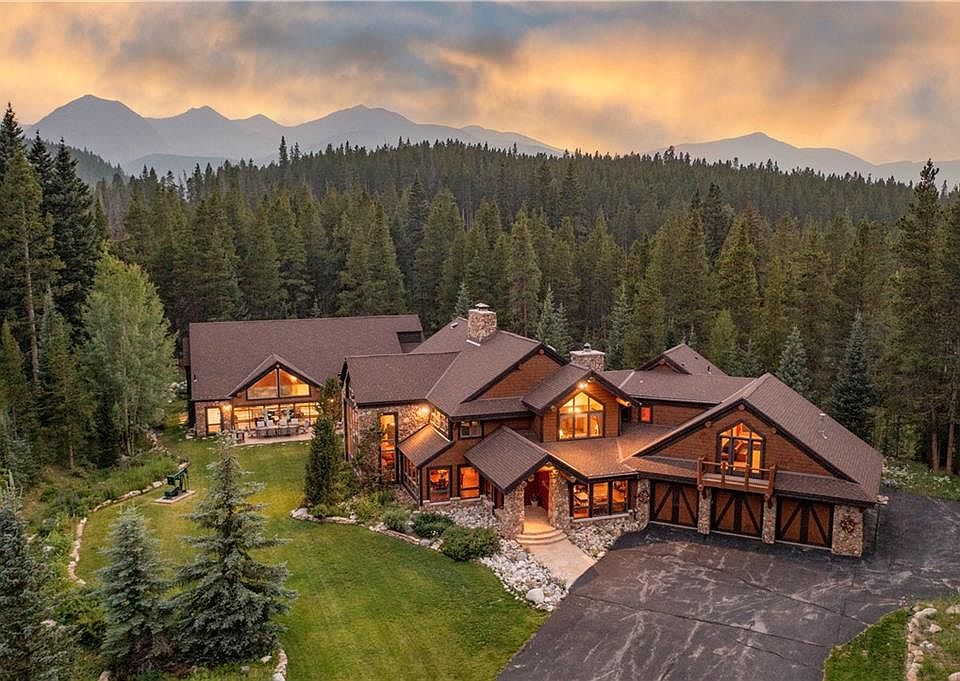
| Forested Sanctuary | Coniferous Timber | Wildfire / Pests | Defensible Space; Ember-Resistant Vents |
| High Desert Ridge | Arid Scrub / Plateau | UV Degradation / Wind | Radiative Cooling; Wind-Rated Glazing |
| Valley Floor Lodge | Meadows / Basins | Cold-Air Pooling / Flood | High-Efficiency Insulation; Drainage |
Realistic Decision Logic
Before selecting a procurement or management framework, the property steward must rank the asset on a 1–10 scale across technical hardening and metabolic efficiency. A sum below 22 signals that a property requires significant “Operational Capital” before a steward can certify it as a secure sovereign node. Performance assets require 40% higher operational budgets to maintain the same level of integrity, as the mountain-induced wear-and-tear accelerates the decay of high-fidelity systems.
Detailed Scenarios: Operational Failure and Recovery
The “Invisible” Ice Dam Failure
A high-resolution villa in Aspen experienced a slow failure of the roof’s heat-tape system during a record snow cycle.
-
The Failure: The property utilized a traditional “staff-patrol” model. The ice dam remained undetected behind a massive timber soffit for two weeks.
-
The Consequence: Water intrusion ruined the custom millwork in the library, requiring a $180,000 restoration and shuttering the wing for three months.
-
The Correction: Installing real-time interstitial sensors that monitor gutter temperature and moisture. The system would have alerted the steward to the heating failure within minutes.
The “Grid-Dependent” Freeze
An estate in the Colorado Rockies relied solely on the municipal grid and a small backup generator that only powered the lights.
-
The Failure: A winter storm downed the regional lines for 48 hours. The boiler, lacking enough power to cycle, shut down.
-
The Incident: Internal temperatures dropped below 40°F. A secondary guest-wing pipe burst.
-
The Second-Order Effect: The water damage was not found until the owners returned a month later, leading to mold growth and a complete structural gutting.
-
The Correction: Implementing a whole-home lithium storage system (Sovereign Grid) and “Smart Valve” technology that automatically drains pipes if internal temperatures hit a critical floor.
Planning, Cost, and Resource Dynamics
The economics of high-fidelity mountain maintenance are often counterintuitive. Reducing the “Sticker Price” of a service often increases the “Total Cost of Ownership” (TCO). In elite alpine management, administrators entirely decouple cost-saving protocols—such as automated energy load-shedding from the inhabitant’s daily flow.
Range-Based Maintenance and Management Investment (Monthly)
| Expense Item | “Retail” Standard Plan | “High-Fidelity” Hardened Plan |
| Snow Removal (FTE/Seasonal) | $1,000 – $3,000 | $5,000 – $8,000 |
| HVAC & Oxygen Upkeep | $500 – $1,000 | $2,000 – $4,500 |
| Predictive Wildfire Defense | $200 – $500 | $1,500 – $3,000 |
| Cyber/Physical Security | $2,000 – $5,000 | $10,000 – $15,000 |
The “High-Fidelity” plan appears significantly more expensive on paper, yet it prevents the “Black Swan” events that can cost millions. In the professionalization of private mountain space, capital acts as a tool for risk-aversion, not just luxury.
Tools, Strategies, and Support Systems
-
Snow-Melt Driveways: Hydronic systems that keep access routes clear without the need for manual plowing or corrosive salts.
-
Automated Fire Sprinklers (Exterior): High-volume systems that can be activated remotely to create a “wet bubble” around the villa during a wildfire.
-
Oxygen Enrichment Suites: Systems that increase oxygen concentration in primary suites to facilitate sleep and recovery for those arriving from sea level.
-
Thermal Imaging Audits: Quarterly scans of the building envelope to identify “thermal leaks” that indicate impending insulation failure or moisture.
-
Cyber-Hardened Local Networks: Air-gapped systems for sensitive property functions to prevent remote hacking of climate and security systems.
-
Predictive Maintenance Contracts: Agreements with mountain specialists that prioritize “Uptime” over “Repair Speed.”
-
Sovereign Power Grids: Solar-plus-storage systems that allow the property to operate at 100% capacity for 72 hours without external input.
-
Ember-Resistant Vents: Specialized HVAC intake vents designed to deflect embers, the primary cause of house loss during wildfires.
Risk Landscape and Failure Modes
The most dangerous risk in elite mountain property management is “Compounding Fragility.” This occurs when multiple minor stressors fail simultaneously, overwhelming the management layer. For example, a minor power surge might disable the Wi-Fi, which in turn disables the smart snow-melt system, which then prevents staff from reaching the property to fix the boiler.
A systemic approach requires a “Taxonomy of Mountain Risk.” We categorize risks into:
-
Terminal Risks: Wildfire, avalanche, structural collapse from snow load.
-
Operational Risks: Boiler failure, frozen access roads, and power grid loss.
-
Frictional Risks: Altitude sickness, dry-air discomfort, and minor equipment noise.
The goal of the property steward is to ensure that no Frictional Risk ever compounds into an Operational or Terminal Risk.
Governance, Maintenance, and Long-Term Adaptation
A mountain villa is a dynamic asset that requires a “Living Document” of governance. This document must survive both the owner and the manager, providing a roadmap for adaptation to a changing climate.
-
Quarterly Stress Tests: Deliberately cutting power or water for one hour to see how systems and staff respond during winter conditions.
-
Annual Defensible Space Reviews: Re-evaluating the vegetation perimeter to ensure the house remains fire-resilient as the forest grows.
-
The 10-Year Adaptation Plan: Anticipating the obsolescence of current heating technology and ensuring the building’s “Physical Substrate” can accept future geothermal or electric upgrades.
Governance means treating the property as a corporate entity with its own board, its own audits, and its own long-term strategy for survival in the wild.
Measurement, Tracking, and Evaluation
How do we measure the success of an invisible operation? We look at “Leading Indicators” rather than “Lagging Indicators.”
-
Leading Indicator: 100% completion rate of weekly snow-melt system tests. This suggests a blizzard won’t trap the inhabitants.
-
Lagging Indicator: The house didn’t freeze last year. This is often luck, not management.
-
Qualitative Signal: The inhabitant’s sleep quality (monitored via wearable tech) remains high despite the altitude.
-
Quantitative Signal: The “Cost-per-Unit of Uptime” is decreasing even as the property ages.
Documentation examples include the “Metabolic Health Ledger,” a monthly report detailing every energy spike, water anomaly, and staff sentiment shift.
Common Misconceptions and Oversimplifications
-
Myth: High-altitude homes are naturally cool. Correction: Low atmospheric density often leads to excessive heat gain through windows; proper UV-rated glazing is more important than massive HVAC units.
-
Myth: Buying “ski-in/ski-out” is the ultimate luxury. Correction: True luxury is “ski-in/ski-out” without the noise, privacy loss, and traffic of a public resort.
-
Myth: Snow-melt systems are too expensive to run. Correction: They are significantly cheaper than the liability costs of a slip-and-fall or the structural costs of ice damage.
-
Myth: Maintenance can be handled by a generalist. Correction: Property owners create “Technical Debt” when they employ non-specialized labor for high-altitude systems, which eventually forces them to repay that debt later at a 3x premium.
-
Myth: More cameras make a house safer. Correction: Cameras only document failure; automated shutoffs and defensible space prevent it.
-
Myth: A generator is enough for power. Correction: Generators fail; a “Sovereign Grid” with battery backup is the only true way to ensure high-fidelity uptime.
Ethical and Practical Considerations
The rise of the “Sovereign Alpine Node” brings a responsibility to the local mountain ecosystem. A villa that operates as a hardened, resource-hungry island risks becoming a target of local resentment. The most resilient efficiency strategies practice “Radical Transparency,cy” paying significantly above market rates for local specialized labor and providing professional-grade training. This creates a “Loyalty Firewall” that functions far more effectively than any physical security.
Furthermore, we must consider the environmental ethics. A property that consumes vast amounts of energy to keep a pool at 100°F in a blizzard is inherently fragile. True mastery involves building “Passive Resilience” using thermal mass, natural ventilation, and heat-recovery systems to reduce the property’s dependence on a failing external grid.
Conclusion: The Sovereign Alpine Node
The architecture of the luxury mountain residential market has shifted permanently toward the “Sovereign Node.” Success in this field no longer depends on the depth of the timber beams or the height of the peaks. It depends on the integrity of the underlying systems, ems the metabolic health of the building, the digital sovereignty of the network, and the resilience of the human layer.
By applying the principles of high-fidelity stewardship, the modern resident moves beyond the era of reactive repair into an era of structural utility. The goal is not merely to own a beautiful home in the woods, but to govern a resilient environment that facilitates human performance and psychological recovery. In an increasingly volatile global landscape, the well-managed mountain villa is the ultimate fire, a wall, a sanctuary where the complexities of the wild are managed so effectively that they become, quite literally, invisible.