Best Boutique Villas for Groups: The 2026 Operational Authority Guide
In the current landscape of high-resolution travel and sovereign residency, the concept of the group retreat is undergoing a fundamental structural pivot. As we move through 2026, the discerning collective, whether a corporate leadership team, a multigenerational family, or a cohort of sovereign professionals,s is increasingly rejecting the “commodity luxury” of sprawling resorts in favor of “Systemic Intimacy.” This shift is driven by a realization that for high-output groups, true value is found not in a breadth of generic amenities, but in the depth of a controlled, localized ecosystem that facilitates both “Collision” and “Autonomy.”
The emergence of the boutique villa as the primary node for group residency represents a maturation of the hospitality sector. No longer merely a larger version of a family home, the modern group villa is a “Cultural Interface.” It serves as a filtered lens through which a group can engage with a destination, stripping away the friction of mass tourism while providing a high-fidelity, shared experience. Identifying the optimal environment requires moving past aesthetic superficiality and auditing the underlying operational philosophies that allow an independent property to support complex, multi-stakeholder needs.
The challenge of the modern era is the “Boutique Dilution” effect. Large-scale hospitality conglomerates frequently launch “lifestyle collections” that mimic the visual language of independent properties without adopting their soul or service precision. To find a true sanctuary, one must look for “Operational Autonomy” properties where the design, gastronomy, and logistical flow are dictated by a singular creative vision rather than a corporate manual. This article provides a definitive framework for identifying, evaluating, and experiencing the most resilient and authoritative group boutique stays in the global market today.
Understanding “best boutique villas for groups”
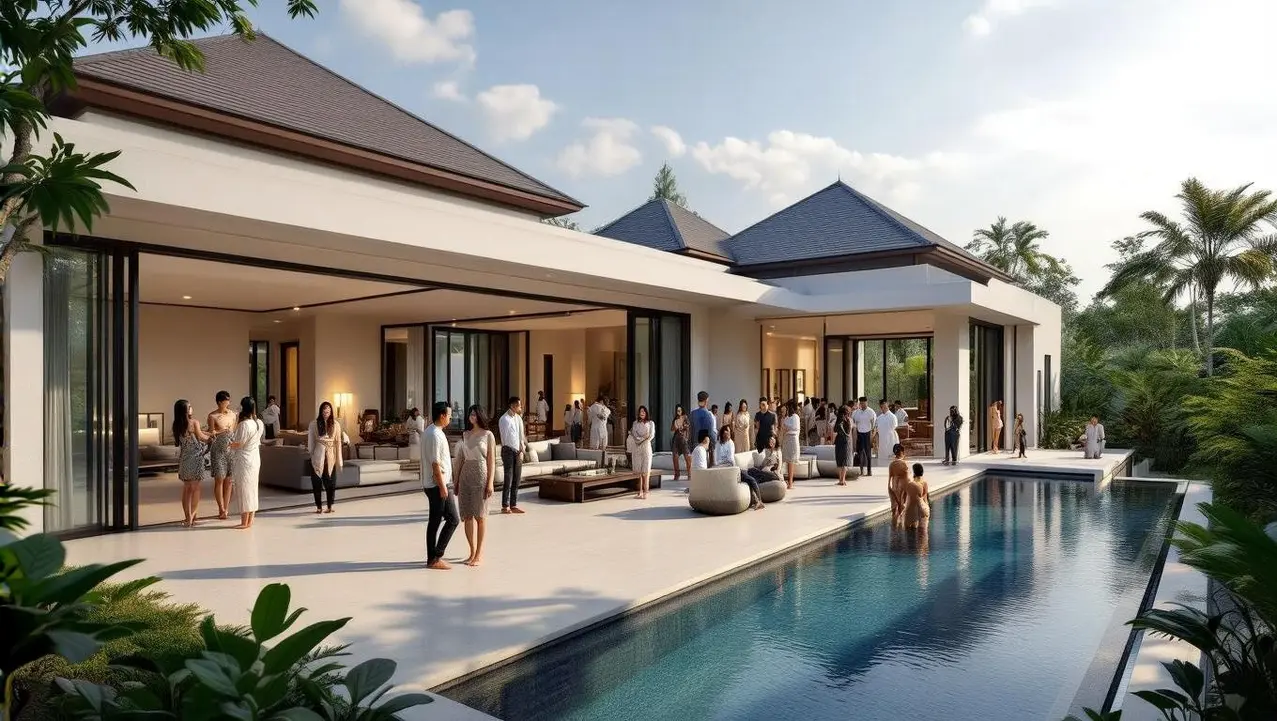
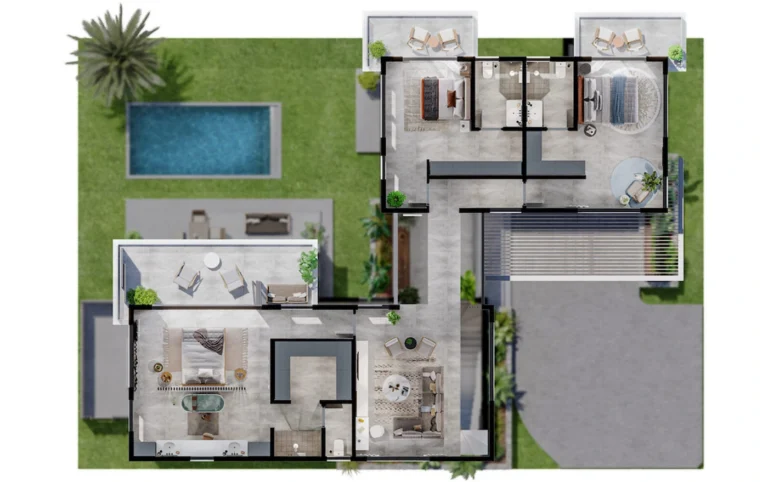
To effectively categorize the best boutique villas for groups, one must first navigate the “Functional Tension” of shared space. Historically, group travel was viewed through the lens of “containment,” finding facilities that could house a large number of people while providing proximity to shared amenities. However, in the contemporary era, the priority has shifted to “Programmatic Density.” This involves the intelligent allocation of space that allows for high-intensity shared interaction (communal dining, strategy sessions) and absolute private recovery (sound-isolated suites, independent outdoor nodes).
A multi-perspective analysis of this sector reveals three primary pillars of group excellence: “Acoustic Integrity,” “Nutritional Sovereignty,” and “Logistical Fluidity.” Acoustic integrity refers to a layout that prevents sound leakage between communal areas and sleeping quarters, as a critical failure point in many legacy designs. Nutritional sovereignty involves a move away from the “buffet” mentality toward a destination kitchen where the culinary layer is tailored to the group’s specific metabolic and cultural requirements. Logistical fluidity is the transition from “scripted hospitality” to “anticipatory intelligence, in whichhe stafactts as facilitators of the group’s unique rhythm rather than followers of a resort schedule.
The oversimplification risk in this category is the “Bedroom Count Trap.” A property may feature ten bedrooms, but if it only possesses one high-bandwidth workspace or a single communal dining table, it fails the “Boutique Audit.” True excellence is the seamless fusion of “Lifestyle” and “Functional Resiliency.” Identifying the right stay involves deconstructing the building’s “Spatial Logic” to ensure it supports, rather than hinders, the group’s collective cognitive load.
Deep Contextual Background: The Evolution of Managed Privacy
The trajectory of group-centric architecture has transitioned from “Containment” to “Empowerment.”
Phase 1: The Neoclassical Fortress (1980–2000)
Born as an extension of the European “grand tour” tradition, early group villas were static, formal, and often high-friction. They were designed for seasonal consumption by large families, prioritized formal entertaining over daily utility, and typically lacked the technical infrastructure for contemporary professional life. Service was reactive and ceremonial.
Phase 2: The Integrated Resort Villa (2001–2020)
As demand for privacy grew, major hotel brands added large villas to their portfolios. This introduced professionalized standards and “amenity access,” but often compromised on “True Autonomy.” These villas were frequently “hotel rooms with connecting doors,” tethered to a central resort engine that dictated the group’s schedule and social interactions.
Phase 3: The High-Resolution Sovereign Node (2021–Present)
We are now in the era of the “Managed Ecosystem.” By 2026, the best group stays are no longer just places to sleep; they are “Hardened Nodes.” They offer a full service-layer that includes wellness integration, technical failovers, and “Educational Support.” This phase prioritizes “Environmental Control,” where the group dictates the noise floor, the lighting temperature, and the service velocity.
Conceptual Frameworks and Mental Models
To vet a potential group stay, we deploy three primary mental models:
1. The “Acoustic Backplane” Matrix
Luxury is defined by silence. This framework evaluates the property’s “Acoustic Shielding.” If a design allows social noise from the living room to enter a bedroom where a member is conducting a high-stakes video conference, the “Boutique” label is a misnomer. A high-resolution group stay must provide a <35dB ambient environment in designated quiet zones regardless of communal activity.
2. The “Collision-to-Privacy” Gradient
A successful group villa must manage the “Social Entropy” of the inhabitants. This model audits the property for three distinct types of space: “High Collision” (communal dining/work), “Medium Collision” (lounge/media rooms), and “Zero Collision” (private suites with independent balconies). The transitions between these zones must be intuitive and frictionless.
3. The “Invisibility-to-Impact” Ratio
This measures the “Cognitive Load Reduction” provided by the staff. In a boutique group environment, the service should be “Anticipatory” rather than “Intrusive.” If a group leader must actively manage staff to ensure that meals align with a strategy session, the service has failed. True luxury is the invisible fulfillment of collective needs.
Key Categories and Operational Trade-offs
The global boutique villa landscape is now specialized into distinct operational archetypes for groups.
| Category | Typical Landscape | Primary Advantage | Operational Trade-off |
| The Technical Sanctuary | Urban / Tech Hubs | 100% Data Uptime; Hardened Security. | Lower “Nature Integration”; higher noise floor. |
| The Regenerative Micro-Estate | Rural / Agricultural | Food Authority; Resource Sovereignty. | Higher logistical friction for external access. |
| The Managed Wildness Lodge | Desert / Alpine | Extreme “Sensory Deprivation”; Focus. | Slower response to unexpected physical needs. |
| The Heritage Refurbishment | Historic Core | Narrative Cohesion; Historical Depth. | Aging infrastructure; asymmetric room sizes. |
| The Modernist Compound | Coastal / Tropics | Indoor-Outdoor Fluidity; Volume. | High maintenance “tax” on technical hardware. |
Decision Logic: The “Residency Audit”
Before a commitment, a group leader should rank the property on a 1–10 scale across: (1) Technical Hardening, (2) Acoustic Isolation, and (3) Service Intuition. A sum below 22 indicates the property is a “Leisure Asset” rather than a “Strategic Partner.”
Detailed Real-World Scenarios
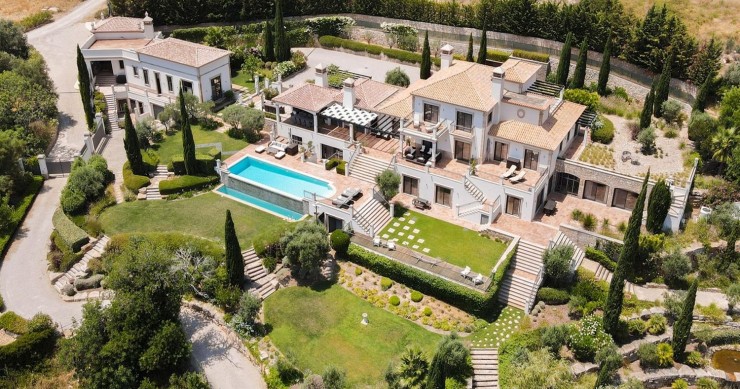
The Executive “Sprint”
A leadership team of eight relocates to a boutique villa in the Swiss Alps for a five-day strategy finalization.
-
The Requirement: 100% network uptime and total silence during the 09:00 to 17:00 window.
-
The Failure Mode: The villa features an open-plan living area with no breakout rooms.
-
The Mitigation: Choosing a villa with “Nodal Zoning,” where suites are on separate floors and the “Office Wing” has independent climate control.
The Multigenerational Reunion
A group of fifteen (ages 2 to 82) stays in a restored Tuscan estate.
-
The Requirement: Managing the diverse mobility and acoustic needs of three generations.
-
The Incident: The property lacks elevators or ground-floor suites, forcing older members to navigate stairs constantly.
-
Logic: Even the most beautiful heritage site must be audited for “Universal Accessibility” to function as a top-tier group stay.
Planning, Cost, and Resource Dynamics
The economics of elite group residency are driven by the “Value of Uptime.”
Range-Based Professional Investment (Monthly)
| Expense Item | “Standard” Luxury Plan | “High-Fidelity” Boutique Plan |
| Daily Residency Rate | $2,000 – $5,000 | $8,000 – $25,000+ |
| Technical Stack (Data/IT) | Included (Consumer) | Included (Enterprise/Redundant) |
| Gastronomic Investment | $150/person | $400/person (Private Chef/Optimized) |
| Service Surcharge | Gratuity Based | Protocol-Based (Managed) |
| Net Productivity ROI | High | Maximum (Cognitive Freedom) |
Tools, Strategies, and Support Systems
To operationalize a high-resolution residency, the group leader utilizes a “Sanctuary Stack”:
-
Acoustic Profiling: Using localized decibel meters to identify the “Quiet Baseline” of each room before assigning suites to members.
-
Network Bonding (SD-WAN): Merging Fiber, 5G, and Satellite links to ensure 100% communication redundancy for the group.
-
Circadian Calibration: Utilizing tunable lighting systems (2700K to 6500K) to maintain biological synchronization for travelers coming from different time zones.
-
Logistical Automation: Pre-provisioning the villa with specific nutritional and technical supplies via regional supply chains 48 hours before arrival.
-
Occupancy Sensors: Using non-invasive sensors to alert the staff to empty communal areas, allowing for housekeeping to occur without social friction.
-
Managed Maintenance Windows: Scheduling all property upkeep during the group’s “Off-Node” hours (e.g., when the group is out for a coordinated activity).
Risk Landscape and Failure Modes
-
The “Shared-Amenity” Leak: When a “boutique” property shares its pool or gym with other villas, destroying the “Social Privacy” of the group.
-
Technical Obsolescence: Managing a high-output career from a property with “Legacy Infrastructure” (e.g., outdated HVAC or slow-upload speeds).
-
The “Service Over-Familiarity” Trap: When the service staff breaks the “Professional Distance,” leading to social noise and a breakdown of privacy.
-
Environmental Volatility: Sudden changes in the local ecosystem (construction noise, seasonal tourism spikes) that the property management fails to mitigate.
Governance, Maintenance, and Long-Term Adaptation
A successful residency requires “Active Environmental Monitoring.”
-
The 48-Hour “Onboarding” Stress-Test: Testing the staff’s response to a simulated network outage and a last-minute logistical pivot (e.g., a change in dietary requirements for the entire group).
-
Monthly Infrastructure Refresh: For long-term stays, ensuring that all air filters, network routers, and ergonomic furniture are audited and updated.
-
Governance Checklists:
-
Network Latency < 15ms (Hardwired)
-
Ambient Noise < 35dB (Work Hours)
-
Air Quality: CO2 < 600ppm
-
Primary/Secondary Power Redundancy Verified
-
Measurement, Tracking, and Evaluation
-
Leading Indicators: Daily Sleep Scores (via biometrics); IAQ (Indoor Air Quality) stability; Network Latency logs.
-
Lagging Indicators: Total group billable output during the stay; qualitative “Stress Delta” pre- and post-residency.
-
Documentation Examples:
-
The Performance Log: Tracking the group’s collective output vs. room temperature and light levels.
-
The “Node Ledger”: A personal database of specific villas that meet the “Sovereign Baseline” for future bookings.
-
Common Misconceptions and Oversimplifications
-
Myth: “A king-size bed is the primary luxury.” Correction: The “Technical Backplane” and “Acoustic Insulation” are the primary luxuries for a functional group stay.
-
Myth: “Boutique means small.” Correction: Boutique means “Customized.” A 15,000 sq.ft. An estate can be boutique if its operations are bespoke.
-
Myth: “Isolation equals focus.” Correction: Isolation can lead to boredom; “Controlled Connection” (the ability to engage with the world on your terms) is the goal.
-
Myth: “All luxury villas have fast Wi-Fi.” Correction: Most have fast “Download” speeds, but lack the “Upload” stability and “Low Latency” required for professional-grade interaction.
Ethical, Practical, or Contextual Considerations
The rise of the “Sovereign Group Node” also brings a responsibility to the local ecosystem. A villa that operates in total isolation from its community risks becoming a “Luxury Island.” The best boutique villas for groups are those that practice “Radical Transparency,” supporting local artisans, using regenerative energy, and ensuring that their “Service Layer” is provided by local professionals who are paid above market rates. This creates a “Healthy Bio-Regionalism” that enhances the group’s sense of place and ethical stability.
Conclusion: The Sovereign Node
The architecture of a successful group residency in 2026 is an exercise in “Environmental Integrity.” The search for a sanctuary is no longer about finding a “place to stay,” but about procuring an “Operational Advantage.” By applying a rigorous, systems-based audit to their environment, a group transforms its residence from a static location into a dynamic catalyst for collective output and recovery. In an increasingly noisy world, the boutique villa is the final firewall.