Top Desert Villas Arizona: The 2026 Guide to Arid Fidelity
The contemporary maturation of the luxury residential market has moved beyond the era of aesthetic surplus toward a period of functional specificity, particularly within the xeric landscapes of the American Southwest. For the sovereign traveler, the high-output professional, or the institutional investor, traditional markers of desert luxury such as adobe-style architecture, expansive floor-to-ceiling glass, and shaded pergolas now function as baseline commodities rather than competitive advantages. In their place, a new hierarchy of value has emerged, centered on “Operational Fidelity.” A villa no longer exists merely as a dwelling; it operates as an engineered node that facilitates specific psychological and physiological outcomes through the rigorous management of a volatile, high-thermal-swing environment.
Identifying and executing resilient strategies for these properties requires moving beyond the “vacation rental” vernacular. We are witnessing the professionalization of private space, where the quality of technical hardening and the security of the infrastructure blur the distinction between high-end hotels and private estates. For the senior strategist or the property steward, the selection of an administrative framework for an Arizona asset represents a high-stakes decision that dictates long-term authority and fiscal viability in a landscape defined by extreme UV radiation, water scarcity, and significant diurnal temperature fluctuations.
As we move through 2026, systemic integrity increasingly defines the success of these occupancies, specifically, the degree to which spatial configuration, technical failovers, and thermal-mitigation protocols align to produce a frictionless environment. This transition marks the end of the “amenity-heavy” era, replacing it with an era of structural utility, where the capacity for environmental hardening and cognitive recovery measures the success of a dwelling. This editorial analysis deconstructs the mechanics of elite property administration and identifies the points of failure that compromise the promise of a private arid sanctuary.
Understanding “top desert villas arizona”
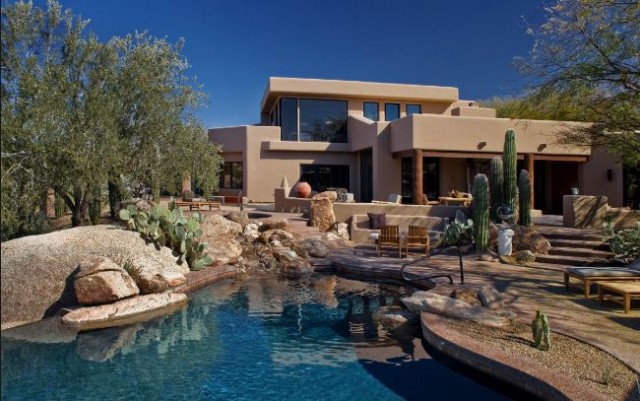
To grasp the full scope of the top desert villas in Arizona, one must view the modern arid estate not as a collection of rooms, but as a metabolic system operating in a state of constant environmental resistance. At its core, the term represents the strategic alignment of physical assets with specific performance outcomes in high-heat, low-humidity, and high-UV environments. In commodity real estate marketing, administrators frequently present desert properties as static retreats. However, true optimization requires a radical departure from this view, acknowledging that an Arizona villa is a dynamic laboratory of resilience where the sun is a constant abrasive force.
A multi-perspective explanation reveals that while the primary goal remains the preservation of the asset’s value, the secondary and tertiary goals involve the “Invisible Operation.” In elite management, administrators entirely decouple maintenance protocols such as the desalination of cooling towers or the calibration of UV-sensitive smart-glass from the inhabitant’s daily flow. The inhabitant should feel the value of the stay in the cognitive “uptime” it provides, while the rigorous battle against solar gain and fine-particulate dust remains obscured. This creates a psychological buffer, allowing the high-net-worth individual or the specialized team to operate without the cognitive drag of arid logistics.
Common misunderstandings often conflate “desert” with “wasteland.” In the context of high-fidelity assets, a villa may be situated in a lush riparian corridor, a stark volcanic plain, or a high-altitude scrubland, each requiring vastly different engineering responses. Oversimplification risks are highest when stakeholders prioritize short-term aesthetic appeal over long-term structural utility. A property that lacks redundant cooling systems or professional-grade water-security protocols cannot be classified as a top-tier stay, regardless of its visual branding. Ignoring these systemic signals often leads to “Technical Debt” utilizing non-specialized labor for high-heat systems, which eventually forces owners to repay that debt later at a 3x premium following a primary cooling failure or a structural crack caused by rapid thermal expansion.
The Actuarial Evolution of the Arid Estate
The trajectory of the high-end American desert villa has shifted from a display of overt labor to an exercise in technical concealment. In the mid-twentieth century, the presence of numerous staff manually watering gardens or cleaning pools signaled status; today, the absence of visible staff, combined with the presence of flawless service and automated xeriscaping, signals true authority. This evolution mirrors the transition from “Trust-Based Systems” to “Protocol-Based Systems.”
Historically, Arizona property owners in domestic markets relied on the individual loyalty of a “caretaker.” While effective in a simpler era, this model possessed a single point of failure. If the individual lacked technical knowledge of modern gray-water reclamation or high-efficiency solar arrays during a heatwave, the asset suffered. The modern era demands a “Decentralized Stewardship” model. Here, the knowledge is embedded in the software, the sensors, and the redundant protocols of the property itself. This shift ensures that the asset remains a high-performance node regardless of personnel turnover or extreme weather.
Systemic hardening now includes digital sovereignty alongside physical resilience. As desert residences integrate complex automation for solar tracking and humidity control, they become targets for digital intrusion. The contemporary arid estate must therefore incorporate a “Technical Firewall” alongside its thermal mass. We no longer underwrite desert property based on proximity to golf courses alone; we underwrite based on the metabolic health of the building’s internal systems, its power redundancy, its water-security integrity, and its cyber-security posture in isolated regions.
Conceptual Frameworks for Xeric Sovereignty
To navigate the complexity of high-fidelity desert residency, stewards should employ specific mental models that prioritize systemic resilience over aesthetic vanity.
1. The “Thermal Lag” Framework
This model prioritizes the utilization of thermal mass to delay the transfer of heat from the exterior to the interior. By engineering walls with high specific heat capacity, the villa “breathes” with the diurnal cycle,e absorbing heat during the day and releasing it during the cooler nights. The limit of this framework is its reliance on a consistent temperature drop at night; if a heatwave eliminates the nighttime cooling period, the thermal mass becomes a liability.
2. The “Hydraulic Security” Model
In the Arizona desert, water is not just an amenity; it is the primary risk factor. This framework treats water as a closed-loop resource. Every drop of gray water is captured, treated, and repurposed for landscaping or cooling. The limit here is the energy required for filtration; without a sovereign power grid, hydraulic security is compromised.
3. The “Dust-Infiltration” Theory
The success of a managed environment in the desert is measured by its capacity to exclude fine particulates. Dust is not just a cleaning nuisance; it is an abrasive force that destroys HVAC bearings and compromises air quality. This theory prioritizes positive-pressure air systems and airtight thermal envelopes.
Categorical Variations: Hardening the Desert Plant
Optimization requires recognizing that the top desert villas in Arizona belong to distinct archetypes, each requiring unique hardening strategies and maintenance cadences.
| Category | Primary Landscape | Primary Risk Vector | Hardening Priority |
| High-Desert Plateau | High Altitude / Wind | UV Damage / Freeze-Thaw | UV-Rated Glazing; Insulation |
| Low-Basin Oasis | Extreme Heat / Sand | Cooling Failure / Dust | Redundant HVAC; Air Seals |
| Volcanic Escarpment | Rock / Isolation | Seismic / Accessibility | Structural Anchors; Comms |
| Riparian Arid Zone | Canyons / Water | Flash Floods / Pests | Elevation; Sump Redundancy |
Realistic Decision Logic
Before selecting a procurement or management framework, the property steward must rank the asset on a 1–10 scale across technical hardening and metabolic efficiency. A sum below 22 signals that a property requires significant “Operational Capital” before it can be certified as a secure sovereign node. Performance assets require 40% higher operational budgets to maintain the same level of integrity, as the solar-induced wear-and-tear accelerates the decay of high-fidelity systems.
Detailed Scenarios: Operational Failure and Recovery
The “Invisible” AC Condenser Failure
A high-resolution villa in Scottsdale experienced a slow failure of the primary cooling tower’s desalination unit.
-
The Failure: The property relied on a traditional “break-fix” model. Calcium buildup went unnoticed for months.
-
The Consequence: During a 115°F weekend, the system seized. The interior temperature reached 95°F within three hours, destroying several high-value art pieces.
-
The Correction: Installing real-time pressure and flow sensors on the cooling lines. The system would have alerted the steward to the buildup weeks in advance.
The “Dust-Storm” Grid Loss
An estate in the Sonoran desert relied solely on the municipal grid for its air-filtration and positive-pressure systems.
-
The Failure: A “haboob” (dust storm) downed local power lines. The villa’s backup generator failed to start due to clogged air intakes.
-
The Incident: Fine dust infiltrated the entire interior, settling into the electronics and HVAC ducts.
-
The Second-Order Effect: Remediation cost $85,000 and required the property to be offline for 30 days during peak season.
-
The Correction: Implementing a “Sovereign Grid” with battery storage and self-cleaning air intakes for all backup power sources.
Planning, Cost, and Resource Dynamics
The economics of high-fidelity desert maintenance are often counterintuitive. Reducing the “Sticker Price” of a service often increases the “Total Cost of Ownership” (TCO). In elite arid management, administrators entirely decouple cost-saving protocols such as automated energy load-shedding from the inhabitants’ daily flow.
Range-Based Maintenance and Management Investment (Monthly)
| Expense Item | “Retail” Standard Plan | “High-Fidelity” Hardened Plan |
| Water Stewardship (FTE) | $500 – $1,000 | $2,500 – $4,500 |
| HVAC & Filtration Upkeep | $1,000 – $2,000 | $4,000 – $7,000 |
| Predictive Solar Defense | $300 – $600 | $1,500 – $2,500 |
| Cyber/Physical Security | $2,000 – $5,000 | $10,000 – $15,000 |
The “High-Fidelity” plan appears significantly more expensive on paper, yet it prevents the “Black Swan” events that can cost millions. In the professionalization of private desert space, capital acts as a tool for risk-aversion, not just luxury.
Tools, Strategies, and Support Systems
-
Radiative Cooling Panels: Specialized surfaces that emit heat into space via the atmospheric window, cooling without energy input.
-
Gray-Water Bioreactors: On-site systems that treat water to a high standard for reuse in landscape irrigation.
-
Smart-Tint Glazing: Windows that automatically adjust their opacity based on solar intensity to minimize cooling loads.
-
Thermal Imaging Audits: Quarterly scans of the building envelope to identify “thermal bridges” that indicate insulation failure.
-
Positive-Pressure HVAC: Systems that keep the interior pressure slightly higher than the exterior to prevent dust infiltration.
-
Sovereign Solar Grids: Lithium-plus-PV systems that allow for 72 hours of total independence from the municipal grid.
-
Predictive Maintenance Software: Tools that track the lifecycle of every mechanical part based on actual environmental stress.
-
Digital Twins: Real-time 3D models of the villa’s environmental systems used for remote troubleshooting.
Risk Landscape and Failure Modes
The most dangerous risk in elite desert property management is “Compounding Fragility.” This occurs when multiple minor stressors fail simultaneously, overwhelming the management layer. For example, a minor power surge might disable the Wi-Fi, which in turn disables the smart water valves, which then prevents the staff from receiving a leak alert during a critical heat cycle.
A systemic approach requires a “Taxonomy of Arid Risk.” We categorize risks into:
-
Terminal Risks: Total water loss, structural failure from soil subsidence, total loss of privacy.
-
Operational Risks: AC failure, grid loss, primary filtration breach.
-
Frictional Risks: Interior dust, high UV exposure on patios, and minor equipment noise.
The goal of the property steward is to ensure that no Frictional Risk ever compounds into an Operational or Terminal Risk.
Governance, Maintenance, and Long-Term Adaptation
A desert villa is a dynamic asset that requires a “Living Document” of governance. This document must survive both the owner and the manager.
-
Quarterly Stress Tests: Deliberately cutting power or water for one hour to see how systems and staff respond during high-heat periods.
-
Annual UV Audits: Measuring the degradation of exterior coatings and seals to adjust replacement cadences.
-
The 10-Year Water Plan: Anticipating local groundwater depletion and ensuring the building’s infrastructure can adapt to new water-hauling or atmospheric-generation technologies.
Governance means treating the property as a corporate entity with its own board, its own audits, and its own long-term strategy for survival.
Measurement, Tracking, and Evaluation
How do we measure the success of an invisible operation? We look at “Leading Indicators” rather than “Lagging Indicators.”
-
Leading Indicator: 100% completion rate of weekly desalination filter checks. This suggests a total cooling failure is unlikely.
-
Lagging Indicator: The house didn’t overheat last year. This is often luck, not strategy.
-
Qualitative Signal: The inhabitant’s sleep quality (monitored via wearable tech) remains high despite extreme exterior temperatures.
-
Quantitative Signal: The “Cost-per-Unit of Uptime” is decreasing even as the property ages.
Documentation examples include the “Metabolic Health Ledger,” a monthly report detailing every energy spike, water anomaly, and staff sentiment shift.
Common Misconceptions and Oversimplifications
-
Myth: More glass is always better in the desert. Correction: Glass is a thermal liability; high-fidelity villas utilize “Selective Transparency” to preserve views while minimizing heat gain.
-
Myth: Desert homes should be painted white. Correction: While white reflects heat, it creates intense glare that causes “Visual Fatigue”; high-performance earth tones can be just as efficient with proper insulation.
-
Myth: AC units should be oversized for safety. Correction: Oversized units cycle too frequently, failing to dehumidify the air and wearing out mechanical parts twice as fast.
-
Myth: Maintenance can be handled by a generalist. Correction: Property owners create “Technical Debt” when they employ non-specialized labor for high-heat systems.
-
Myth: Drip irrigation is the ultimate water saver. Correction: Drip lines frequently clog with minerals; high-fidelity estates use subsurface sensors and pressure-monitored loops.
-
Myth: Security is about gates and guards. Correction: Security is about the “Loyalty Firewall” and digital sovereignty.
Ethical and Practical Considerations
The rise of the “Sovereign Arid Node” brings a responsibility to the local Arizona ecosystem. A villa that operates as a hardened, resource-hungry island risks becoming a target of local resentment. The most resilient efficiency strategies practice “Radical Transparency,y” paying significantly above market rates and providing professional-grade training. This creates a “Loyalty Firewall” that functions far more effectively than physical security.
Furthermore, we must consider the environmental ethics. A property that consumes vast amounts of water to maintain a lawn in the desert is inherently fragile. True mastery involves building “Passive Resilience” using thermal mass, natural ventilation, and heat-recovery systems to reduce the property’s dependence on a failing external grid.
Conclusion: The Sovereign Arid Node
The architecture of the luxury desert residential market has shifted permanently toward the “Sovereign Node.” Success in this field no longer depends on the depth of the pool or the height of the mountain view. It depends on the integrity of the underlying system, ms the metabolic health of the building, the digital sovereignty of the network, and the resilience of the human layer.
By applying the principles of high-fidelity stewardship, the modern resident moves beyond the era of reactive repair into an era of structural utility. The goal is not merely to own a beautiful home in the sun, but to govern a resilient environment that facilitates human performance and psychological recovery. In an increasingly volatile global landscape, the well-managed desert villa is the ultimaterefugeall a sanctuary where the complexities of the arid world are managed so effectively that they become, quite literally, invisible.