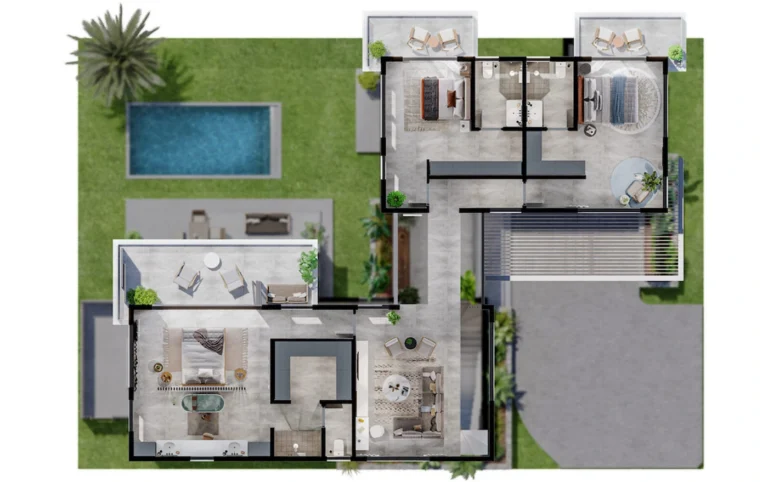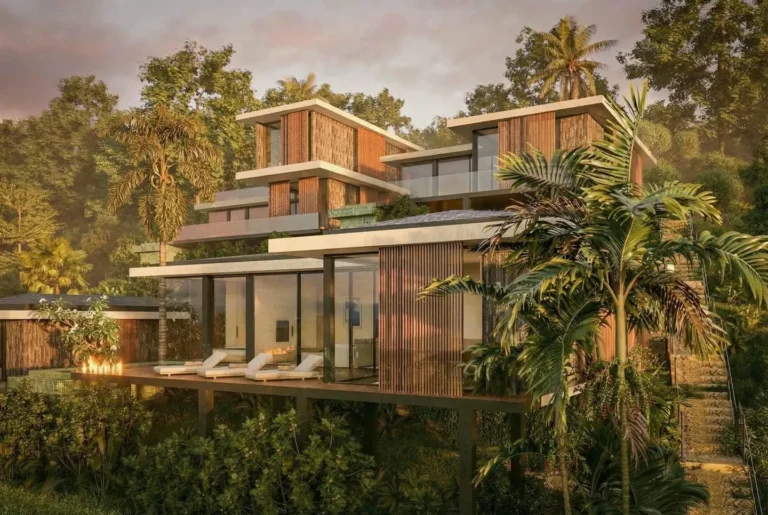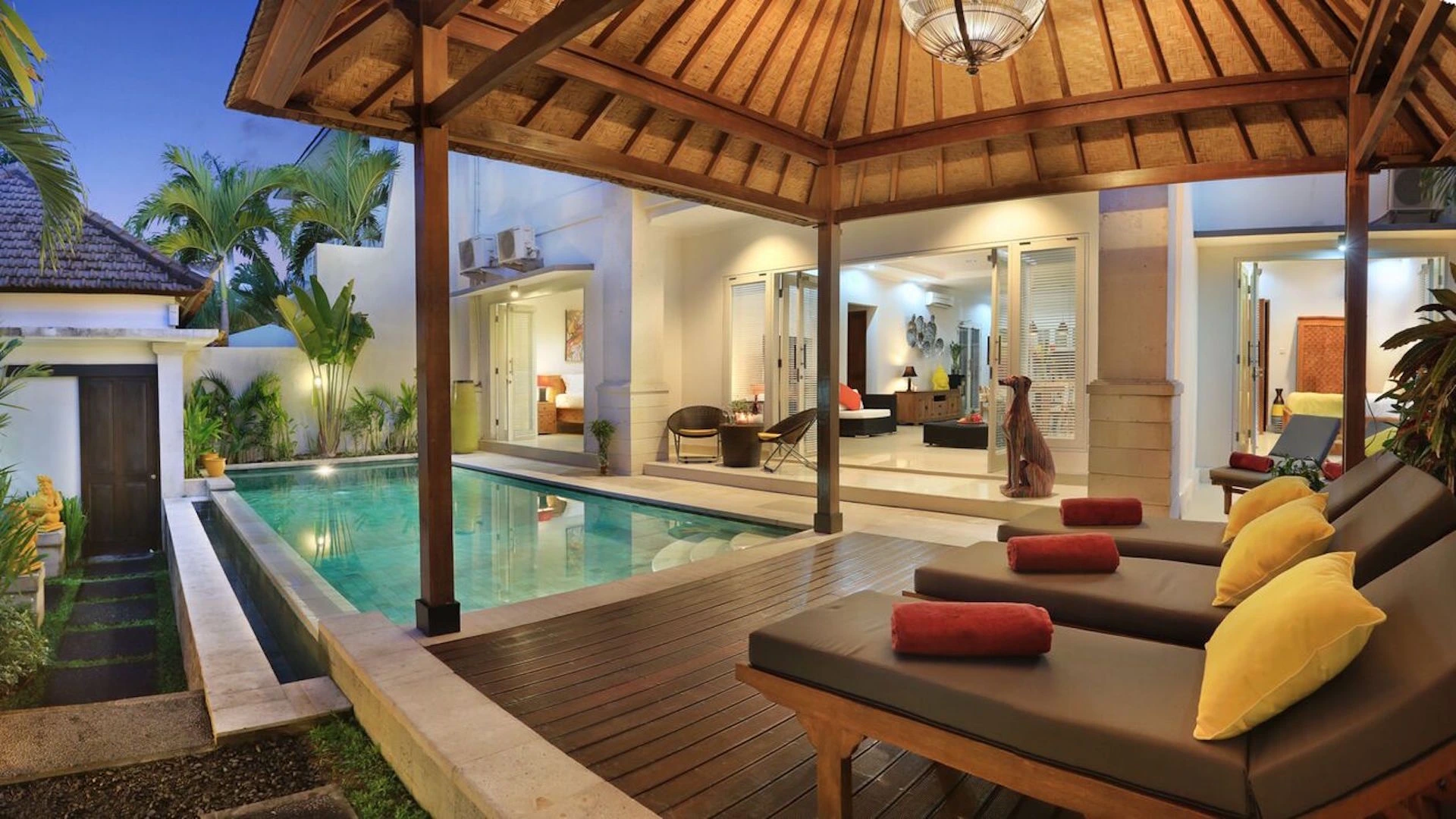
Boutique Villa Ideas: The 2026 Operational Authority Guide
The contemporary maturation of the luxury residential market has moved beyond the era of aesthetic surplus toward a period of “Functional Specificity.” For the sovereign traveler, the high-output professional, or the institutional investor, the traditional markers of luxury marble finishes, infinity pools, and high staff-to-guest ratios are increasingly viewed as baseline commodities rather than competitive advantages. In their place, a new hierarchy of value has emerged, centered on the “Operational Fidelity” of the environment. A villa is no longer merely a dwelling; it is an engineered node designed to facilitate specific psychological and physiological outcomes.
Identifying and executing the most resilient strategies for these properties requires moving beyond the “short-term rental” vernacular. We are witnessing the professionalization of private space, where the distinction between a high-end hotel and a private estate is blurred by the quality of the service layer and the technical hardening of the infrastructure. For the senior strategist or the property steward, the selection of a management framework is a high-stakes decision that dictates the asset’s long-term “Topical Authority” in a crowded marketplace.
As we move through 2026, the success of these assets is increasingly defined by “Systemic Integrity,” the degree to which the spatial configuration, technical failovers, and service protocols align to produce a frictionless environment. This transition marks the end of the “amenity-heavy” era, replaced by an era of structural utility, where the success of a dwelling is measured by its capacity for environmental hardening and cognitive recovery. This editorial analysis deconstructs the mechanics of elite villa innovation, providing a robust framework for long-term residency and architectural stewardship.
Understanding “boutique villa ideas.”
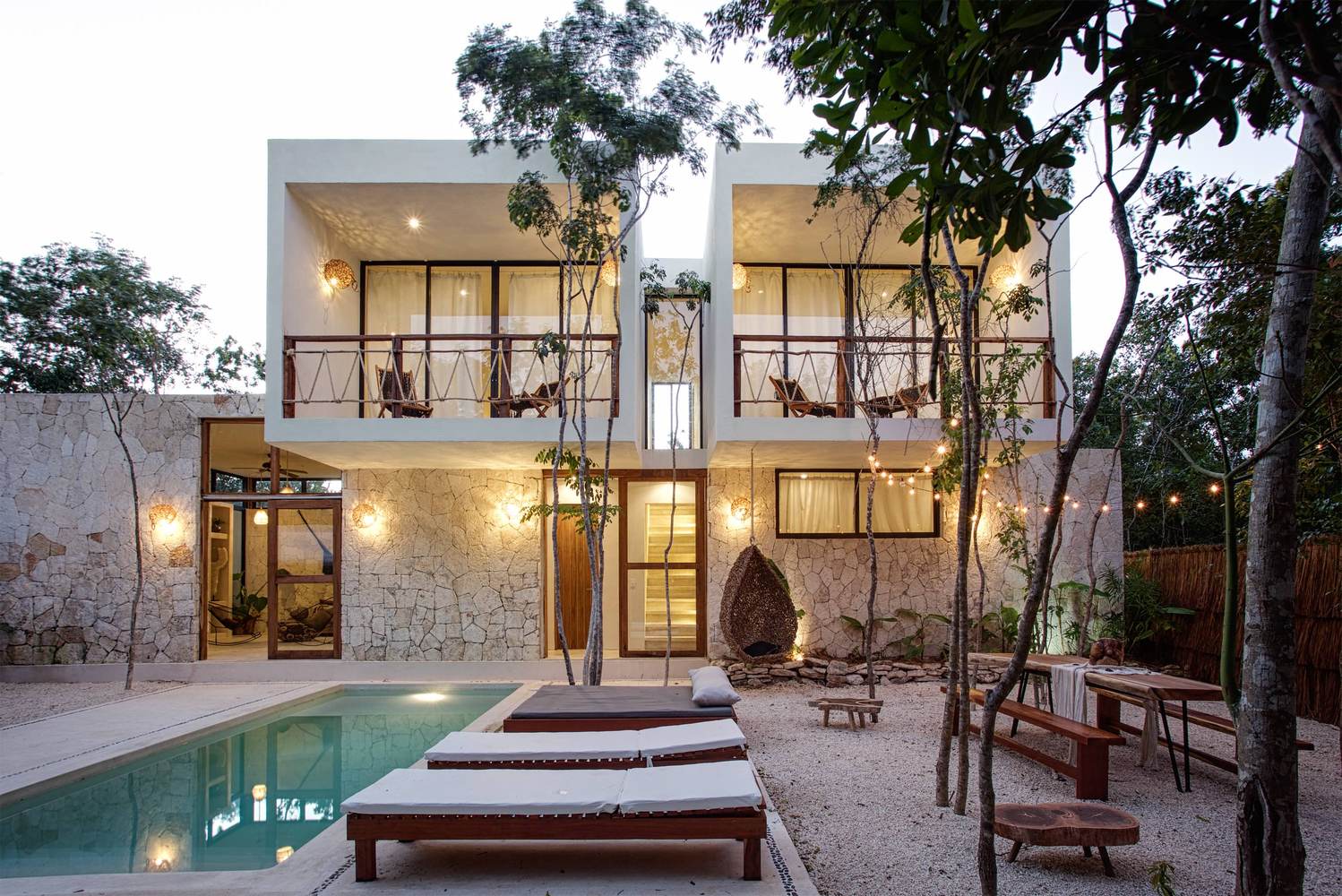
To effectively evaluate boutique villa ideas, one must first dismantle the “Passive Income Fallacy.” In commodity real estate marketing, property concepts are often presented as simple turn-key solutions. However, in the high-resolution boutique market, an “idea” is actually a complex “Service-Level Agreement” (SLA) between the owner, the management entity, and the physical asset. It encompasses the “Acoustic Integrity” of the guest experience, the “Technical Uptime” of the property’s infrastructure, and the “Logistical Fluidity” of the service layer.
A multi-perspective explanation reveals that the most effective concepts are those that treat the building as a “High-Resolution Node.” This involves the strategic management of light, sound, and air to create a “Hardened Sanctuary” for the occupant. Misunderstandings often arise when stakeholders confuse a “visual style” with a “boutique philosophy.” A visual style is a skin; a boutique philosophy is a biological rhythm for the house, and a set of protocols that ensure the building performs at its peak during every “Occupancy Event.”
Oversimplification risks manifest in the focus on “Instagrammable Corners” over “Yield Per User.” A boutique villa is a specialized node; its value is not in being broadly popular, but in providing a perfect environment for the specific demographic it was designed to serve. By prioritizing the “Psychological Gradient” of the stay, ensuring a seamless transition from a social state to a productive or restorative state,e these ideas ensure the asset acts as a multiplier for the occupant’s performance rather than a source of environmental friction.
Deep Contextual Background: The Evolution of Managed Privacy
The trajectory of private estate management has moved through three distinct evolutionary phases that define the current high-fidelity landscape.
Phase 1: The Reactive Stewardship (1980–2010)
Initially, the “villa” was an exercise in “Static Authority.” The amenities were largely ceremonial grand staircases and formal dining rooms meant for visual display rather than functional utility. These buildings were high-friction environments, requiring large staffs to maintain even basic comfort.
Phase 2: The Resort-Integrated Model (2011–2022)
The rise of digital marketplaces introduced “Professionalized Marketing.” This era focused on “The Visual Narrative” professional photography and standardized guest communications. However, the physical operations often lagged behind the digital promise, leading to “Narrative Depreciation” when the guest’s physical experience failed to match the online imagery.
Phase 3: The Systemic Sovereignty (2023–Present)
We are currently in the era of “Institutional-Grade Operations.” Modern villa concepts are designed with built-in “Technical Hardening,” “Regenerative Systems,” and “Biological Optimization.” The focus has shifted from “renting a room” to “managing a high-performance environment.” Today’s plans include specific protocols for air quality monitoring, network redundancy (Starlink/Fiber bonding), and “Acoustic Shielding.”
Conceptual Frameworks and Mental Models
To evaluate potential operational frameworks, we deploy four primary mental models:
1. The “Acoustic Backplane” Matrix
This model views the residence as a hardened node. If the design allows for “Acoustic Bleed” between the gym (high decibel) and the library (low decibel), the architecture is a failure. Luxury is defined by the absolute integrity of the soundscape within the home.
2. The “Friction-to-Focus” Delta
This measures the time and cognitive energy required to manage the property’s logistics (meals, maintenance, security) against the time available for primary work or recovery. A top-tier villa uses a service layer to reduce this delta to near-zero.
3. The “Invisibility-to-Impact” Ratio
This measures the “Logistical Friction” of the service layer. In elite management, the staff and maintenance paths are entirely decoupled from the guest’s primary circulation routes. The operation of the house should be felt in the outcome, but the process should remain invisible to the inhabitant.
Key Categories and Operational Trade-offs
Boutique villa management has specialized into several distinct archetypes, each requiring a different governance strategy and offering unique trade-offs.
| Category | Typical Landscape | Primary Advantage | Operational Trade-off |
| The Technical Sanctuary | Urban Infill / Tech Hubs | 100% Data Uptime; Hardened Security. | Lower “Nature Integration”; higher energy costs. |
| The Regenerative Micro-Estate | Rural / Agricultural | Resource Sovereignty; Food Authority. | High logistical friction for maintenance. |
| The Managed Wildness Lodge | Desert / Alpine | Extreme Privacy; Sensory Deprivation. | Limited access to external support systems. |
| The Tropical Brutalist | Coastal / High Humidity | Thermal Mass; Biophilic Recovery. | High humidity “tax” on technical hardware. |
| The Heritage Refurbishment | European Historic Cores | Narrative Cohesion; Historical Depth. | Aging infrastructure; complex acoustic hardening. |
Decision Logic: The “Residency Audit”
Before selecting a plan, a stakeholder should rank the property on a 1–10 scale across three vectors: (1) Technical Hardening, (2) Programmatic Fidelity, and (3) Logistical Invisibility. A sum below 22 indicates the property requires significant “Operational Capital” before it can successfully enter the boutique market.
Detailed Real-World Scenarios
The “Launch Week” Sprint Node
A senior strategist needs absolute isolation for a 10-day project finalization.
-
The Idea: A “Technical Sanctuary” with dual Starlink failovers and sound-isolated work booths.
-
The Outcome: 14-hour daily focus cycles made possible by the total absence of social or environmental noise.
-
Failure Mode: If the property lacks an on-site battery failover (e.g., Tesla Powerwall), a localized grid surge could destroy the creative flow.
The “Acoustic Breach” in a Heritage Stay
A resident attempts a deep-work cycle in a historic villa in a Mediterranean village.
-
Incident: A local festival begins in the adjacent square, creating 85dB of environmental noise.
-
Impact: The villa’s historic windows provide zero acoustic shielding, rendering the “Production Node” useless for 48 hours.
-
Logic: Even the most beautiful heritage site must undergo “Technical Hardening” (secondary glazing/acoustic baffling) to be viable for the modern professional.
Planning, Cost, and Resource Dynamics
The economics of boutique management must be calculated through the lens of “Total Value of Residency” (TVR). A plan that charges a premium but provides 99.9% technical uptime and superior “Asset Preservation” is mathematically superior to a “budget” manager who allows the property’s “Narrative Authority” to decay.
Range-Based Operational Investment (Monthly)
| Expense Item | “Standard” Luxury Plan | “High-Fidelity” Boutique Plan |
| Management Fees | 10% – 15% | 25% – 40% |
| Technical Redundancy | Reactive | Native (Fiber/Satellite/Power) |
| Staffing Model | Gig-economy / Outsourced | Professional / Dedicated |
| Maintenance Strategy | Corrective (Break-Fix) | Predictive (Protocol-Driven) |
| Net Operational ROI | Market Dependent | Utility Driven (Premium) |
Tools, Strategies, and Support Systems
To operationalize the defense of the villa, the professional utilizes a “Residency Stack”:
-
Environmental Monitoring (IoT): Real-time tracking of CO2, VOCs, and Decibel levels to ensure the “Room Baseline” remains optimal for cognitive performance.
-
SD-WAN Network Bonding: Merging multiple data sources (Fiber + Starlink) to ensure zero latency during high-stakes communication.
-
Circadian Lighting Blueprints: Integrating tunable lighting (2700K to 6500K) natively into the electrical infrastructure to support biological rhythms.
-
Predictive Maintenance Logs: Utilizing data from smart appliances to schedule service before a failure occurs.
-
Acoustic Baffling Arrays: Utilizing modular, high-NRC (Noise Reduction Coefficient) panels in the designated office node.
-
Water Purity Ledger: Regular testing of on-site water for TDS (Total Dissolved Solids) and heavy metals to ensure metabolic health.
Risk Landscape and Failure Modes
-
The “Character” Overhang: When a property’s aesthetic becomes a barrier to functional comfort (e.g., stone floors that are too cold or stairs that are too steep).
-
Technical Decay: In boutique environments, a reliance on high-end automation creates ‘Single-Point Failures’ when operators fail to maintain the software regularly.
-
The “Staff-Knowledge” Silo: When the “Operational Logic” of the house exists only in the head of a single manager, creating a “Single-Point-of-Failure.”
-
Supply Chain Fragility: A service layer that lacks local “Redundant Providers” for food, water, or technical parts.
Governance, Maintenance, and Long-Term Adaptation
A successful villa plan requires “Active Residential Governance.”
-
The 48-Hour “Onboarding” Stress-Test: Testing the staff’s response to a simulated network outage and a last-minute logistical pivot (e.g., a change in dietary requirements for an entire group).
-
Quarterly Hardware Refresh: Rotating routers, battery cells, and air filtration units every 90 days to maintain “Operating Fidelity.”
-
Governance Checklist:
-
Network Latency < 15ms (Hardwired)
-
Ambient Noise < 35dB (Work Hours)
-
Air Quality: CO2 < 600ppm
-
Primary/Secondary Power Redundancy Verified
-
Measurement, Tracking, and Evaluation
-
Leading Indicators: Daily Sleep Scores (via biometrics); IAQ (Indoor Air Quality) stability; Network Latency logs.
-
Lagging Indicators: Property Value Retention; Inhabitant Productivity Metrics; Environmental Satisfaction scores over 5 years.
-
Documentation Examples:
-
The Performance Log: Tracking the home’s energy consumption vs. inhabitant well-being.
-
The “Systemic Registry”: A digital twin of the villa documenting all material origins and technical specifications.
-
Common Misconceptions and Oversimplifications
-
Myth: “Technology equals luxury.” Correction: Invisible technology equals luxury. Visible gadgets that require manual troubleshooting are a liability.
-
Myth: “Boutique means small.” Correction: Boutique means “Customized.” A 10,000 sq.ft. An estate can be boutique if its systems are bespoke.
-
Myth: “A villa is a passive asset.” Correction: A villa is an “Active Business Node.” It requires daily operational governance to maintain its value.
-
Myth: “Guest experience is subjective.” Correction: Guest comfort is biological. It is measured in CO2 levels, decibel counts, and circadian alignment.
Ethical, Practical, or Contextual Considerations
The rise of the “Sovereign Node” brings a responsibility to the local ecosystem. A villa that operates in total isolation from its community risks becoming a “Luxury Island.” The best boutique villa ideas practice ‘Radical Transparency’ by supporting local artisans, utilizing regenerative energy, and ensuring that local professionals receive pay above market rates, providing the ‘Service Layer. This creates a “Healthy Bio-Regionalism” that enhances the resident’s sense of place and ethical stability.
Conclusion: The Sovereign Node
The pillars of ‘Technical Rigor’ and ‘Contextual Stewardship’ build the architecture of a successful life in 2026. ” The ability to select the right environment is no longer merely a lifestyle choice; it is a critical skill for the modern high-output professional. By moving from a “Guest” mindset to a “Systemic Governor” mindset, the resident ensures that their environment acts as a catalyst for their authority. In an increasingly noisy world, the villa is the ultimate firewall.