Common Villa Renovation Mistakes: The 2026 Strategic Pillar
The contemporary maturation of the luxury residential market has moved beyond the era of aesthetic surplus toward a period of functional specificity. For the sovereign property owner, the high-output professional, or the institutional investor, the traditional markers of luxury marble finishes and expansive floor plans are increasingly viewed as baseline commodities rather than competitive advantages. In their place, a new hierarchy of value has emerged, centered on “Operational Fidelity.” A villa is no longer merely a dwelling; it is an engineered node designed to facilitate specific psychological and physiological outcomes through the rigorous management of the physical and technical environment.
Identifying and executing the most resilient refurbishment strategies for these properties requires moving beyond the “home improvement” vernacular. We are witnessing the professionalization of private space, where the distinction between a high-end hotel and a private estate is blurred by the quality of the technical hardening and the durability of the infrastructure. For the senior strategist or the property steward, the selection of a renovation framework is a high-stakes decision that dictates the asset’s long-term authority and fiscal viability in an increasingly complex global marketplace.
As we move through 2026, the success of these assets is increasingly defined by systemic integrity, the degree to which the spatial configuration, technical failovers, and structural longevity align to produce a frictionless environment. This transition marks the end of the “cosmetic-first” era, replaced by an era of structural utility, where the success of a refurbishing project is measured by its capacity for environmental hardening and cognitive recovery. This editorial analysis deconstructs the mechanics of elite property transformation, specifically focusing on the elimination of vulnerabilities that compromise the promise of a private sanctuary.
Understanding “common villa renovation mistakes”
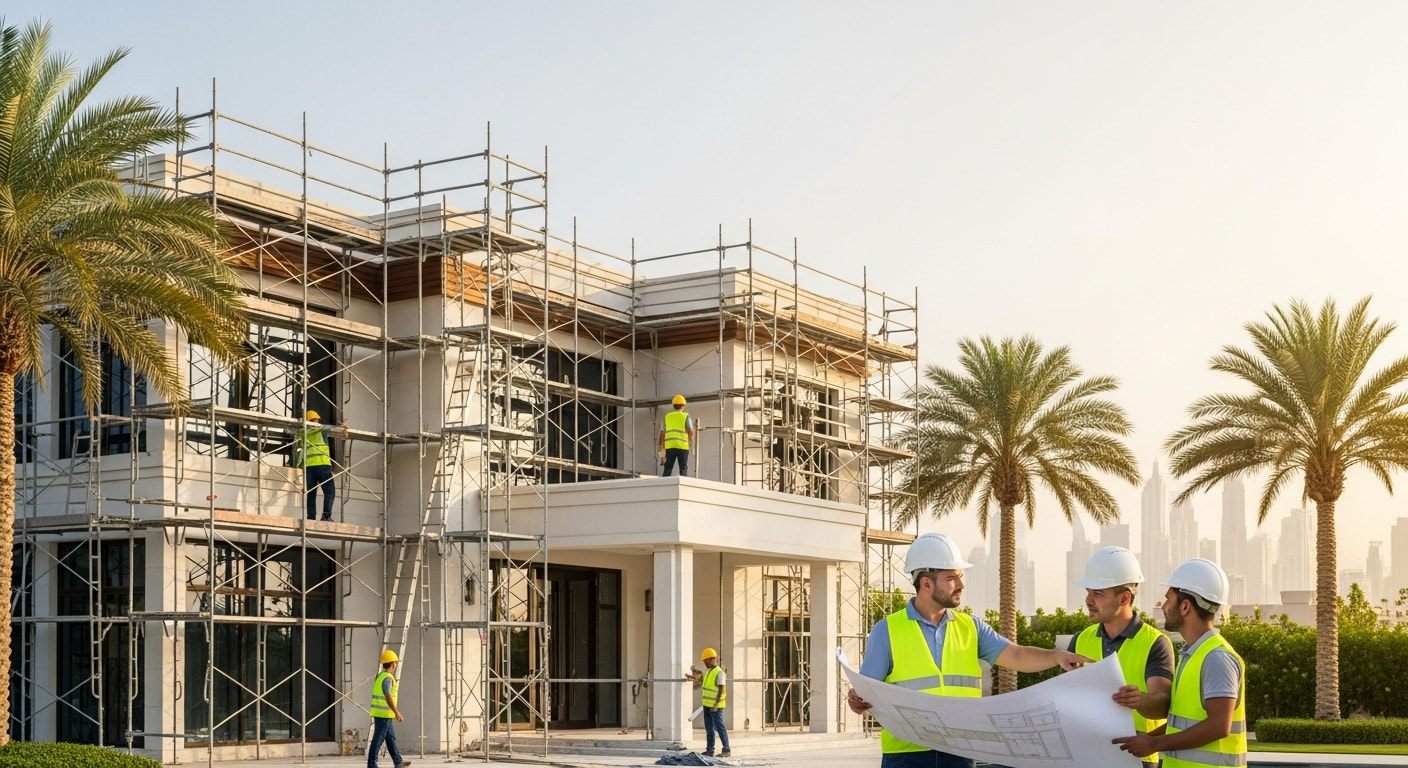
To effectively execute the protocols of high-end property transformation, one must first dismantle the “Visual Fallacy.” In commodity real estate marketing, renovation is often presented as a simple chronological list of aesthetic upgrades,s new flooring, updated kitchens, and fresh paint. However, in the high-resolution luxury market, renovation is actually a complex service-level agreement between the inhabitant and the physical asset. Common villa renovation mistakes often stem from a failure to recognize this agreement, treating the property as a static backdrop rather than an active, engineered environment.
A multi-perspective explanation reveals that the most effective environments are those that treat the building as a high-resolution node. This involves the strategic management of light, sound, and air to create a “Hardened Sanctuary.” Misunderstandings often arise when stakeholders confuse “finish quality” with “operational fidelity.” Finish quality is a social layer; operational fidelity is a technical layer, a set of protocols that ensure the building performs at its peak. When the technical layer is sacrificed for the sake of aesthetic speed, the asset suffers from Narrative Depreciation.
Oversimplification risks manifest in the focus on superficial trends over yield-per-resource. A boutique villa functions as a specialized node; it derives value not from broad popularity, but from providing a perfect environment for its target demographic. By prioritizing the psychological gradient of the stay, ensuring a seamless transition from a social state to a productive or restorative state,e these refurbishing strategies ensure the asset acts as a multiplier for the occupant’s performance rather than a source of environmental friction or maintenance anxiety.
Deep Contextual Background: The Evolution of Managed Privacy
The trajectory of private estate refurbishment has moved through three distinct evolutionary phases that define the current high-fidelity landscape.
Phase 1: The Aristocratic Legacy (Pre-2010)
Initially, the villa was an exercise in static authority. Renovations were largely ceremonial, focusing on preserving the “presence” of the building. Amenities were often ornamental rather than functional. These buildings were high-friction environments, requiring large staffs to maintain even basic comfort. Service was reactive, and luxury was defined by the willingness to absorb high, unoptimized overhead. The primary failure mode was deferred maintenance of the core infrastructure in favor of grand facades.
Phase 2: The Connected Disruption (2011–2022)
The rise of digital marketplaces introduced professionalized marketing and “smart home” integration. This era focused on the visual narrative, ve making a property “photogenic” for digital platforms. However, the physical operations often lagged behind the digital promise. Renovations frequently involved adding layers of consumer-grade technology atop aging infrastructure, leading to “Technical Debt.” Mistakes in this period shifted toward a reliance on gadgets over fundamental building science.
Phase 3: Systemic Sovereignty (2023–Present)
We are currently in the era of institutional-grade operations. Modern villa refurbishments are designed with built-in technical hardening, regenerative systems, and biological optimization. The focus has shifted from “decorating” to “managing a high-performance node.” Modern properties include specific protocols for network redundancy, acoustic shielding, and metabolic efficiency. The most prevalent mistakes now involve a failure to integrate these complex systems into a cohesive, user-centric governance model.
Conceptual Frameworks and Mental Models
To evaluate potential transformation failures, we deploy four primary mental models:
1. The “Acoustic Backplane” Matrix
This model views the residence as a hardened node. If a renovation allows for acoustic bleed between high-activity zones (the gym or service kitchen) and low-activity zones (the library or primary suite), the architecture is a failure. Luxury is defined by the absolute integrity of the soundscape; a mistake here is a permanent tax on the inhabitant’s focus.
2. The “Infrastructure-to-Finish” Ratio
This measures the investment in invisible systems (HVAC, wiring, waterproofing) versus visible finishes. A high-fidelity node requires a ratio that prioritizes the “Substrate” over the “Skin.” A common failure is spending 80% of the budget on marble while leaving 40-year-old plumbing in the walls.
3. The “Friction-to-Focus” Delta
This measures the time and cognitive energy required to manage the property’s logistics post-renovation. If the new systems (lighting, climate, security) require frequent manual troubleshooting or user manuals, the renovation has introduced friction. A successful project utilizes anticipatory logic to reduce this delta to near-zero.
Key Categories: Hardening the Physical and Technical Plant
Renovation strategies must vary based on the archetype of the property. Failing to adapt the plan to the specific landscape is among the most common villa renovation mistakes.
| Category | Primary Landscape | Advantage | Typical Refurbishment Failure |
| Technical Sanctuary | Urban Infill | Data Uptime; Security. | Over-glazing leading to thermal gain. |
| Regenerative Micro-Estate | Rural / Agricultural | Resource Sovereignty. | Underestimating logistical supply lines. |
| The Tropical Brutalist | Coastal / Tropics | Thermal Mass; Recovery. | Use of materials prone to corrosion. |
| Managed Wildness Lodge | Desert / Alpine | Extreme Privacy. | Inadequate off-grid battery redundancy. |
| Heritage Refurbishment | Historic Cores | Narrative Depth. | Compromising structural integrity for open plans. |
Decision Logic: The “Residency Audit”
Before initiating a project, a stakeholder should rank the asset on a 1–10 scale across technical hardening and metabolic efficiency. A sum below 15 indicates the property requires a “Deep Core” renovation rather than a cosmetic refresh. Attempting to “surface-fix” a low-score property is a recipe for fiscal disaster.
Detailed Real-World Scenarios
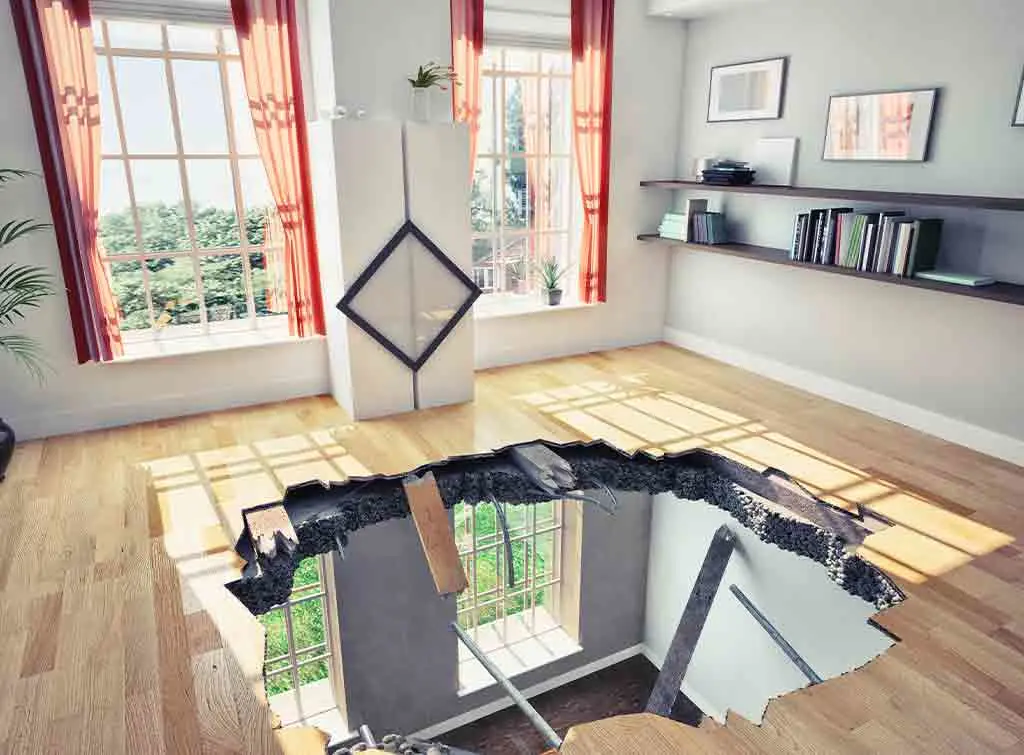
The “Open Plan” Acoustic Collapse
A resident renovates a heritage villa to create a modern, open-plan living area.
-
The Incident: Once occupied, the resident finds that the sound of the kitchen espresso machine echoes into the mezzanine office.
-
Failure Point: Removing structural walls that acted as acoustic baffles without replacing them with high-NRC (Noise Reduction Coefficient) materials.
-
Result: Total loss of professional utility for the office node.
The “Smart Home” Technical Debt
A villa owner installs a complex, proprietary lighting system during a high-end refurbishment.
-
The Incident: Three years later, the manufacturer goes out of business, and a single failed control board renders the entire ground floor dark.
-
Failure Point: Prioritizing “closed-loop” proprietary systems over open-standard, hardwired infrastructure.
-
Logic: Luxury is longevity. Systems must be maintainable by local technicians without specialized software keys.
Planning, Cost, and Resource Dynamics
The economics of villa transformation must be calculated through the lens of Total Cost of Ownership (TCO). A renovation that appears expensive but provides native metabolic yields (solar, greywater) is mathematically superior to a “cheap” cosmetic flip.
Range-Based Operational Investment (Per Square Foot)
| Expense Item | “Cosmetic” Refresh | “High-Fidelity” Hardening |
| Core Infrastructure | Reactive (Patch-fix) | Proactive (Full Replacement) |
| Technical Stack | Consumer-grade Wi-Fi | Enterprise-grade Fiber/WAPs |
| Thermal Defense | Basic Glazing | Low-E / Thermally Broken / Argon |
| Acoustic Defense | Minimal (Standard Drywall) | Strategic (STC-rated assemblies) |
Tools, Strategies, and Support Systems
To operationalize the defense of the renovation budget, the professional utilizes a “Residency Stack” designed to preempt failure:
-
Digital Twin Modeling: Utilizing 3D scans to map all invisible infrastructure (pipes, wires) before closing walls.
-
Phase Change Materials (PCM): Integrating thermal storage into the walls to reduce active HVAC load.
-
Decoupled Service Paths: Renovating the floor plan to ensure staff can move through the house without entering the resident’s “Privacy Circle.”
-
Circadian Lighting Logic: Hardwiring lighting that shifts color temperature automatically to support biological rhythms.
-
Redundant Data Bonding: Integrating multiple ISPs (Satellite + Fiber) into the structural wiring.
-
Water Purity Hardening: Implementing point-of-entry filtration that removes heavy metals and microplastics.
Risk Landscape and Failure Modes
-
The “Style-over-Service” Trap: When the aesthetic choice (e.g., minimalist handle-less cabinets) creates daily physical friction for the user.
-
The Regulatory Oversight: Failing to account for localized zoning or environmental laws can result in work stoppages or permanent fines.
-
Technical Obsolescence: Installing technology with a 2-year lifecycle into a building with a 50-year lifecycle.
-
Supply Chain Fragility: Selecting rare finishes that cannot be easily repaired or replaced when damage occurs during residency.
Governance, Maintenance, and Long-Term Adaptation
A successful renovation plan requires active “Operational Governance.” One of the most frequent errors is treating the handover as the end of the project.
-
The 48-Hour Onboarding Stress-Test: Running all systems (HVAC, irrigation, pool heat) at maximum load for 48 hours to identify latent failure points.
-
The Quarterly “Envelope” Audit: Inspecting seals, gaskets, and network nodes to ensure no performance decay.
-
Governance Checklist:
-
Verify STC (Sound Transmission Class) ratings between zones.
-
Confirm ISP failover triggers in < 500ms.
-
Audit “Ghost Loads” on the electrical panel.
-
Validate metabolic yields (solar/water harvest).
-
Measurement, Tracking, and Evaluation
-
Leading Indicators: Real-time energy consumption per square foot; ambient noise levels in “Quiet Zones”; network latency logs.
-
Lagging Indicators: Mean time between maintenance calls; asset value appreciation vs. market average; inhabitant cognitive recovery scores.
-
Documentation Example: The “Infrastructure Ledger” is a digital record of every material, part number, and warranty associated with the renovation.
Common Misconceptions and Oversimplifications
-
Myth: Renovating a kitchen adds the most value. Correction: In 2026, hardening the technical and thermal infrastructure adds the most resilient value.
-
Myth: New windows are just for aesthetics. Correction: High-fidelity windows are primarily acoustic and thermal firewalls.
-
Myth: Smart homes are inherently better. Correction: A “dumb” house with perfect insulation is superior to a “smart” house with poor building science.
-
Myth: Open plans are modern. Correction: Open plans are an acoustic nightmare for high-output residents; “Broken Plan” layouts are the new standard.
-
Myth: Off-grid is too expensive. Correction: In remote nodes, the cost of grid-extension often exceeds the cost of a hardened solar-plus-storage system.
-
Myth: You can’t soundproof an old villa. Correction: Strategic use of secondary glazing and decoupled wall assemblies can achieve near-silent interiors in any heritage site.
Ethical and Practical Considerations
The rise of the “Sovereign Node” brings a responsibility to the local ecosystem. A renovation that ignores the local climate or community standards creates “Aesthetic and Environmental Friction.” The most successful projects utilize “Vernacular Hardening” using local materials and traditional cooling techniques updated with modern building science. This ensures the asset remains relevant and respected in its geographic context.
Conclusion: The Sovereign Node
Technical rigor and structural stewardship build the architecture of a successful life in 2026. The ability to transform an environment and avoid the common villa renovation mistakes that compromise it is no longer merely a lifestyle choice; it is a critical skill for the modern high-output professional. By moving from a “homeowner” mindset to a “systemic governor” mindset, the resident ensures that their environment acts as a catalyst for their authority. In an increasingly noisy world, the hardened, well-renovated villa is the ultimate firewall.