How to Reduce Villa Maintenance Costs: The 2026 Operational Pillar
The contemporary maturation of the luxury residential market has moved beyond the era of aesthetic surplus toward a period of functional specificity. For the sovereign traveler, the high-output professional, or the institutional investor, traditional markers of luxury such as marble finishes, infinity pools, and high staff-to-guest ratios now function merely as baseline commodities rather than competitive advantages. In their place, a new hierarchy of value has emerged, centered on the “Operational Fidelity” of the environment. A villa is no longer merely a dwelling; it is an engineered node that facilitates specific psychological and physiological outcomes through rigorous physical management.
Identifying and executing resilient strategies for these properties demands that we move beyond the common “home repair” vernacular. We are witnessing a professionalization of private space, where the quality of technical infrastructure hardening blurs the distinction between high-end hotels and private estates. For the senior strategist or property steward, the selection of a maintenance framework represents a high-stakes decision that dictates the asset’s long-term authority and fiscal viability in a crowded marketplace.
As we move through 2026, systemic integrity increasingly defines the success of these assets, specifically, the degree to which spatial configuration, technical failovers, and preservation protocols align to produce a frictionless environment. This transition marks the end of the “reactive repair” era, replaced by an era of structural utility, where the capacity for environmental hardening and cost-efficient longevity measures the success of a home. This editorial analysis deconstructs the mechanics of elite property preservation and provides a robust framework for long-term residency and architectural stewardship.
Understanding “how to reduce villa maintenance costs”
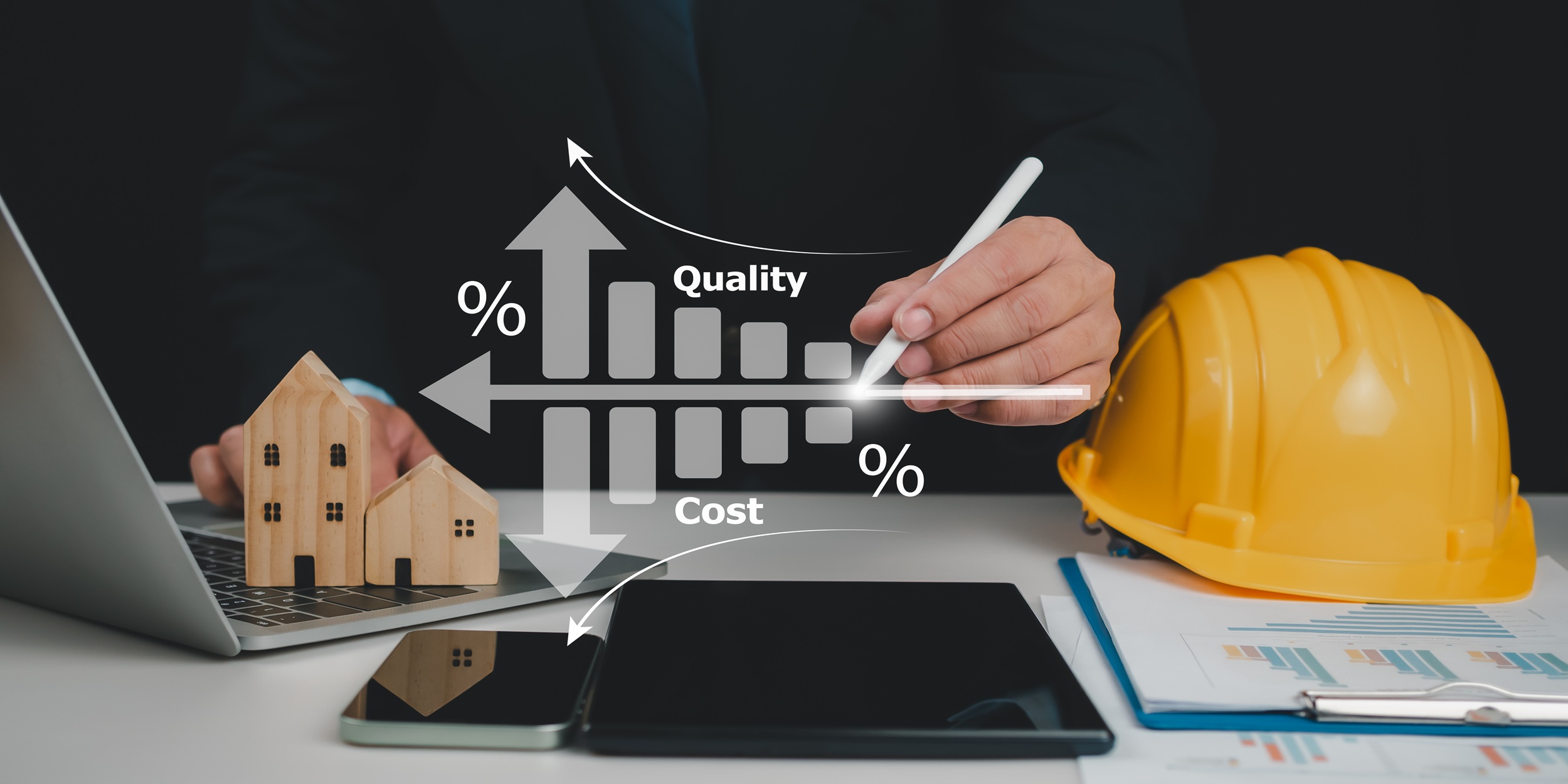
To effectively execute the protocols of how to reduce villa maintenance costs, one must first dismantle the “Deferred Maintenance Fallacy.” Commodity real estate marketing frequently presents cost reduction as a simplistic chronological list of budget cut,s such as hiring cheaper labor, bypassing critical inspections, or utilizing inferior materials. However, in the high-resolution luxury market, cost management is actually a complex service-level agreement between the inhabitant and the physical asset. It encompasses the acoustic integrity of the experience, the technical uptime of the property’s infrastructure, and the logistical fluidity of the preservation layer.
A multi-perspective explanation reveals that the most effective environments are those that treat the building as a high-resolution node. This involves the strategic management of light, sound, and air to create a “Hardened Sanctuary.” Misunderstandings often arise when stakeholders confuse “expense reduction” with “value preservation.” An expense reduction is a transaction; value preservation is a biological rhythm for the hou,se a set of protocols that ensure the building performs at its peak during every occupancy event without requiring catastrophic financial injections.
Oversimplification risks manifest in the focus on superficial aesthetics over yield-per-user. A boutique villa is a specialized node; its value is not in being broadly popular, but in providing a perfect environment for the specific demographic it was designed to serve. By prioritizing the “Friction-to-Focus” de,lta ensuring that the mechanics of the house do not distract from the inhabitant’s primary work or reco,very these preservation strategies ensure the asset acts as a multiplier for the occupant’s performance rather than a source of financial friction.
Deep Contextual Background: The Evolution of Managed Privacy
The trajectory of private estate management has moved through three distinct evolutionary phases that define the current high-fidelity landscape.
Phase 1: The Reactive Stewardship (1980–2010)
Initially, the villa was an exercise in static authority. The amenities were largely ceremonial grand staircases and formal dining rooms meant for visual display rather than functional utility. These buildings were high-friction environments, requiring large staffs to maintain even basic comfort. Maintenance was reactive (the “break-fix” cycle), and luxury was defined by the willingness to pay for immediate, expensive repairs.
Phase 2: The Resort-Integrated Model (2011–2022)
The rise of digital marketplaces introduced professionalized marketing. This era focused on the visual narr,ative professional photo,graphy and standardized guest communications. However, the physical operations often lagged behind the digital promise, leading to narrative depreciation. Maintenance moved toward “preventative” schedules, but often remained superficial, prioritizing the “guest-facing” elements over the critical infrastructure.
Phase 3: The Systemic Sovereignty (2023–Present)
We are currently in the era of institutional-grade operations. Modern villa concepts are designed with built-in technical hardening, regenerative systems, and biological optimization. The focus has shifted from “fixing what is broken” to “engineering out the possibility of failure.” Modern properties include specific protocols for air quality monitoring, network redundancy, and acoustic shielding, with costs managed through predictive analytics.
Conceptual Frameworks and Mental Models
To evaluate potential preservation frameworks, we deploy four primary mental models:
1. The “Entropy Offset” Matrix
This model views the residence as a system constantly decaying. Maintenance is the energy input required to offset this entropy. The goal is to apply the minimum energy at the highest leverag,e point identifying the “Load Bearing Components” of the guest experience and hardening them against failure.
2. The “Hardening-to-Cost” Ratio
This measures the investment in durable, high-fidelity materials (e.g., marine-grade stainless steel in coastal environments) against the long-term labor costs of repairing inferior alternatives. A high-fidelity node prioritizes initial technical hardening to reduce the “Maintenance Tail.”
3. The “Invisibility-to-Impact” Ratio
This measures the logistical friction of the maintenance layer. In elite management, the maintenance paths are entirely decoupled from the guest’s primary circulation routes. The operation of the house should be felt in the outcome, but the process (and the cost of the process) should remain invisible to the inhabitant.
Key Categories and Operational Trade-offs
Boutique villa management has specialized into several distinct archetypes, each requiring a different governance strategy and offering unique trade-offs.
| Category | Primary Environment | Preservation Advantage | Economic Trade-off |
| Technical Sanctuary | Urban / Tech Hubs | Low structural decay; IoT-driven. | High hardware obsolescence rate. |
| Regenerative Micro-Estate | Rural / Agrivoltaic | Resource sovereignty; off-grid. | High logistical friction for specialists. |
| Tropical Brutalist | Coastal / Tropics | Thermal mass; salt-resistant. | High humidity tax on electronics. |
| Heritage Refurbishment | Historic Cores | Proven longevity; thick walls. | Extreme bespoke repair costs; lack of standardization. |
Decision Logic: The “Residency Audit”
Before implementing a cost-reduction strategy, a stakeholder should rank the asset on a 1–10 scale across three vectors: technical hardening, programmatic fidelity, and logistical invisibility. A sum below 22 indicates the property requires significant “Operational Capital” before it can successfully function as a sovereign node with reduced recurring costs.
Detailed Real-World Scenarios

The Coastal Corrosion Pivot
A luxury villa in a tropical locale faces $50,000 in annual repairs due to salt-air corrosion on standard hardware.
-
The Choice: Investing $80,000 in a total hardware “hardening” using 316-grade stainless steel and specialized coatings.
-
The Result: Annual maintenance drop of 85% starting in year two.
-
Logic: Front-loading capital expenditure to eliminate recurring operational friction.
The “Predictive” HVAC Failure
In a high-fidelity urban villa, IoT sensors detect a 12% drop in compressor efficiency before any perceptible change in climate control.
-
The Choice: Immediate $500 servicing during an “Empty Node” window.
-
The Result: Avoiding a $15,000 emergency replacement and the 48-hour loss of occupancy during a peak period.
-
Failure Mode: Ignoring the data leads to “Cascading Infrastructure Failure,” where a broken AC unit causes humidity-driven mold on high-value art or fabric.
Planning, Cost, and Resource Dynamics
The economics of villa preservation must be calculated through the lens of Total Cost of Ownership (TCO). A plan that appears expensive every month but provides 99.9% technical uptime is mathematically superior to a budget manager who allows the property’s authority to decay.
Range-Based Operational Investment (Monthly)
| Expense Item | “Standard” Luxury Plan | “High-Fidelity” Hardened Plan |
| Labor (Fixed) | Reactive / Contractual | Dedicated / Protocol-Driven |
| Technical Redundancy | Low (Single Source) | High (n+1 Redundancy) |
| Replacement Cycle | “Break-Fix” (High Cost) | “Predictive” (Optimized Cost) |
| Energy Profile | Grid-Dependent (Variable) | Hybrid / Regenerative (Stabilized) |
Tools, Strategies, and Support Systems
To operationalize the defense of the villa’s budget, the professional utilizes a “Residency Stack”:
-
Environmental Monitoring (IoT): Real-time tracking of humidity, CO2, and leak detection to prevent silent structural decay.
-
Digital Twin Documentation: A comprehensive record of every serial number, paint code, and material origin to eliminate “Specialist Search” costs.
-
Circadian Lighting Blueprints: Utilizing high-quality LED arrays with long life cycles to reduce the labor costs of frequent bulb replacement.
-
Acoustic Baffling Hardening: Using permanent structural soundproofing over temporary, high-wear acoustic panels.
-
Water Purity Filtration: Centralized filtration to prevent mineral buildup in pipes and high-end appliances, extending their lifespan by 40%.
-
Predictive Maintenance Algorithms: Utilizing historical data to schedule service during the lowest-impact windows.
Risk Landscape and Failure Modes
-
The “Cheap Labor” Trap: Property owners create “Technical Debt” when they employ non-specialized labor for high-fidelity systems such as smart home automation which eventually forces them to repay that debt at a 3x premium.
-
Narrative Depreciation: Allowing the small details (chipped stone, flickering lights) to erode the perceived authority of the asset, leading to lower yields.
-
Climate Fragility: Failure to harden the asset against localized climate shifts (extreme heat or flood), leading to uninsurable losses.
Governance, Maintenance, and Long-Term Adaptation
A successful villa plan requires active “Residential Governance.”
-
The 48-Hour Technical Stress-Test: Quarterly simulations of system failures (power, water, internet) to verify the resiliency of the redundancy layers.
-
Annual “Hardening” Review: Assessing which recurring repair items should be structurally redesigned to be permanent.
-
Governance Checklist:
-
Verify network latency < 15ms
-
Calibrate HVAC humidity thresholds
-
Audit staff protocol adherence
-
Review predictive sensor logs for “Grey Swans” (slow-moving failures)
-
Measurement, Tracking, and Evaluation
-
Leading Indicators: Sensor-driven efficiency logs, air quality stability, and mean time between failure (MTBF).
-
Lagging Indicators: Annual repair-to-revenue ratio, asset valuation growth, and occupancy durability.
-
Documentation Examples: Maintaining a “Systemic Provenance” lo,g a ledger of all professional interventions that serves as a value-add during asset divestment.
Common Misconceptions and Oversimplifications
-
Myth: Cutting staff reduces costs. Correction: Cutting staff usually increases “Deferred Maintenance Debt” as infrastructure oversight is lost.
-
Myth: Newer buildings cost less to maintain. Correction: Complex modern systems require higher-level technical stewardship than “dumb” historic buildings.
-
Myth: Maintenance is a chore. Correction: Maintenance is an investment in “Sovereign Uptime.”
-
Myth: Automation saves money. Correction: Automation only saves money if the software layer is maintained; otherwise, it is a single point of failure.
Conclusion: The Sovereign Node
The architecture of a successful life in 2026 is built on the pillars of technical rigor and contextual stewardship. The ability to select the right environment and maintain it with surgical efficiency is no longer merely a lifestyle choice; it is a critical skill for the modern high-output professional. By moving from a “homeowner” mindset to a “systemic governor” mindset, the resident ensures that their environment acts as a catalyst for their authority. In an increasingly noisy world, the hardened, cost-efficient villa is the ultimate firewall.