Top Boutique Villa Plans: The 2026 Architectural Authority Guide
The contemporary evolution of residential architecture has reached a critical pivot point where the mass-production model of luxury is being systematically dismantled in favor of “High-Resolution Specificity.” In this era, a villa is no longer merely a high-square-footage dwelling; it is an engineered environment designed to facilitate specific cognitive, social, and physiological outcomes. The emergence of the boutique villa movement represents a shift from “Generic Grandeur” to “Contextual Precision,” where the success of a project is measured not by its volume, but by its “Operational Fidelity,” the degree to which the spatial configuration aligns with the inhabitant’s lifestyle backplane.
For the modern stakeholder, whether they are an institutional developer, a keyword architect of hospitality, or a private sovereign,gn the selection of a blueprint is a high-stakes procurement of “Infrastructural Character.” This requires moving beyond the superficiality of floor plans to examine the “Spatial Logic” and “Acoustic Integrity” of the design. A boutique villa is a specialized node in a broader life ecosystem; it must support “Deep Work” states, high-friction social engagement, and total nervous system recovery without compromise.
As we move into 2026, the global domestic market is increasingly bifurcated between commodity-grade luxury and “BoutiqAuthority.” Identifying the most resilient and high-performing designs involves a rigorous auditing of how the building interacts with its topographical and social context. This editorial pillar deconstructs the mechanics of elite villa planning, moving past surface-level aesthetics to provide a robust framework for long-term residential stewardship and architectural topical authority.
Understanding “top boutique villa p.lans”
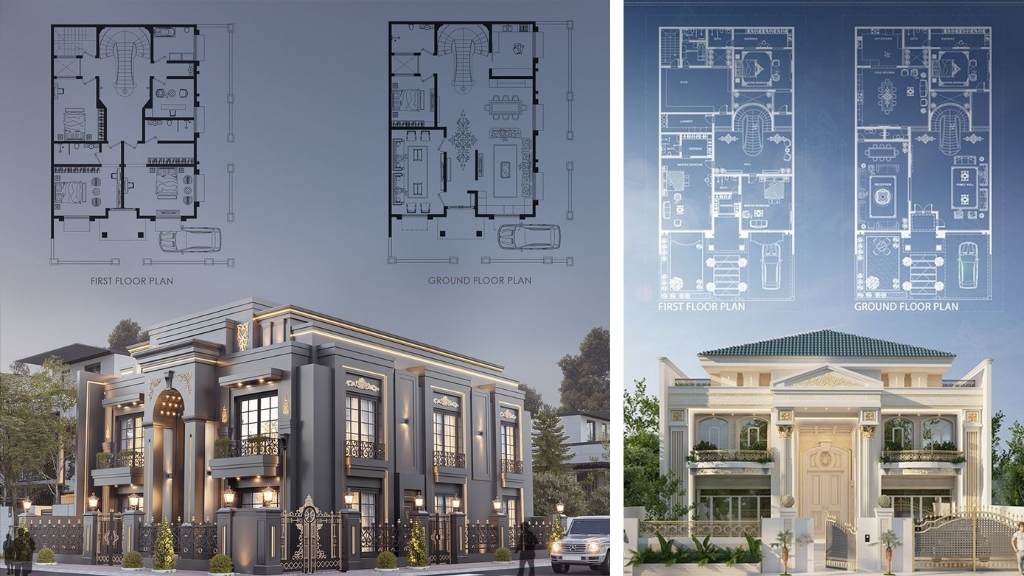
To effectively evaluate top boutique villa plans, one must first dismantle the “Square-Footage Fallacy.” In standard luxury marketing, brokers often conflate value with scale. However, in the high-resolution market, ‘Programmatic Density’ defines in value the intelligence with which every square meter serves a specific function or sensory experience. A boutique plan prioritizes ‘Non-Standardization,’ where the architecture adapts to the nuances of the terrain and the resident’s behavioral patterns rather than following a repeatable corporate template.
A multi-perspective explanation of this sector reveals that the most effective plans are those that treat the building as a “Sensory Filter.” This involves the strategic management of light, sound, and air to create a “Hardened Sanctuary.” Misunderstandings often arise when stakeholders confuse a “design-heavy” plan with a “boutique” plan. A design may be visually striking, but if it lacks the “Operational Backplane,” the invisible systems for privacy, technical redundancy, and service-layer invisibility, it fails to meet the criteria of elite boutique architecture.
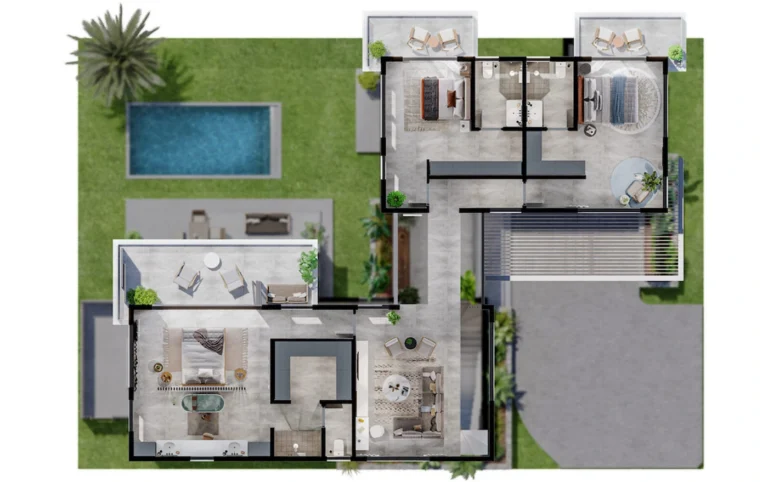
Oversimplification risks manifest in the focus on “Floor Plates” over “Spatial Sequences.” A villa is not a static object; it is a sequence of experiences. Top-tier planning focuses on the “Circulation Friction,n,” how easily a resident can transition from a social state to a productive state. By prioritizing the “Psychological Gradient” of the home, these plans ensure that the architecture acts as a multiplier for the resident’s performance rather than a source of environmental stress.
Deep Contextual Background: The Evolution of the Managed Estate
The trajectory of boutique villa design has moved through distinct evolutionary phases that define the current high-fidelity landscape.
Phase 1: The Neoclassical Fortress (1880–1950)
Initially, the “villa” was an exercise in “Static Authority.” The plans were rigid, symmetrical, and designed to project social status through historical mimicry. These buildings were high-friction environments, requiring large staffs and significant maintenance without regard for individual occupant ergonomics.
Phase 2: The Modernist Disruption (1951–1990)
The rise of the International Style introduced “Open-Plan Fluidity.” This era focused on the relationship between the interior and exterior, but often at the cost of “Acoustic Integrity” and “Thermal Control.” The boutique element during this period was defined by architectural purity rather than operational utility.
Phase 3: The High-Resolution Integration (1991–Present)
We are currently in the era of “Systemic Intimacy.” Modern villa planning has matured into a sophisticated layer of the hospitality-residential hybrid. Today’s boutique blueprints are designed with built-in “Technical Hardening,” “Regenerative Systems,” and “Biological Optimization.” The focus has shifted from “where to live” to “how to integrate” a restorative or productive cycle into the physical structure of the home.
Conceptual Frameworks and Mental Models
To evaluate potential villa blueprints, we deploy four primary mental models:
1. The “Acoustic Backplane” Matrix
This model views the residence as a hardened node. If the plan allows for “Acoustic Bleed” between private focus zones and social zones, the architecture is a failure. Luxury is defined by the absolute integrity of the soundscape within the home.
2. The “Biophilic Redundancy” Model
This framework assesses how the plan utilizes natural systems (light, air, vegetation) as primary infrastructure rather than just decorative elements. A high-fidelity plan ensures that if mechanical systems fail, the building remains a viable, comfortable sanctuary through passive design.
3. The “Service-Layer Invisibility” Theory
This measures the “Logistical Friction” of the plan. In elite boutique design, the staff and maintenance paths are entirely decoupled from thresidentss primary circulation routes. The operation of the house should be felt, but never seen.
Key Categories and Operational Trade-offs
Boutique villa design has specialized into several distinct categories, each serving a specific psychological and topographical profile.
| Category | Typical Landscape | Primary Advantage | Operational Trade-off |
| Tropical Brutalist | Coastal/High Humidity | Thermal mass, durability, and bold aesthetic. | High initial carbon footprint; specific maintenance needs. |
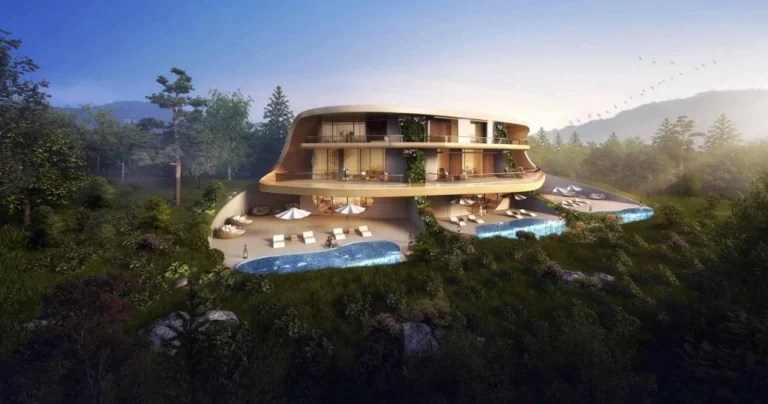
| Managed Wildness | Desert/Alpine | Psychological recovery; extreme views. | High logistical friction for construction and access. |
| Post-Industrial Sanctuary | Urban Infill | Privacy, historical depth, and creative stimulus. | Limited outdoor space; complex zoning. |
| Regenerative Micro-Estate | Rural/Agricultural | Resource sovereignty; circular ecology. | High operational burden; “Off-Grid” risks. |
| Modular High-Fidelity | Multi-Site/Universal | Speed of deployment; technical consistency. | Risk of “Genericness”; limited site specificity. |
Decision Logic: The “Residency Audit”
Before a commitment to a plan, a stakeholder should conduct a “Residency Audit,” ranking the blueprint on a scale of 1–10 across three vectors: (1) Structural Integrity, (2) Programmatic Fidelity, and (3) Logistical Invisibility. If the sum is below 22, the plan is a “Visual Asset” rather than an “Authority Asset.”
Detailed Real-World Scenarios
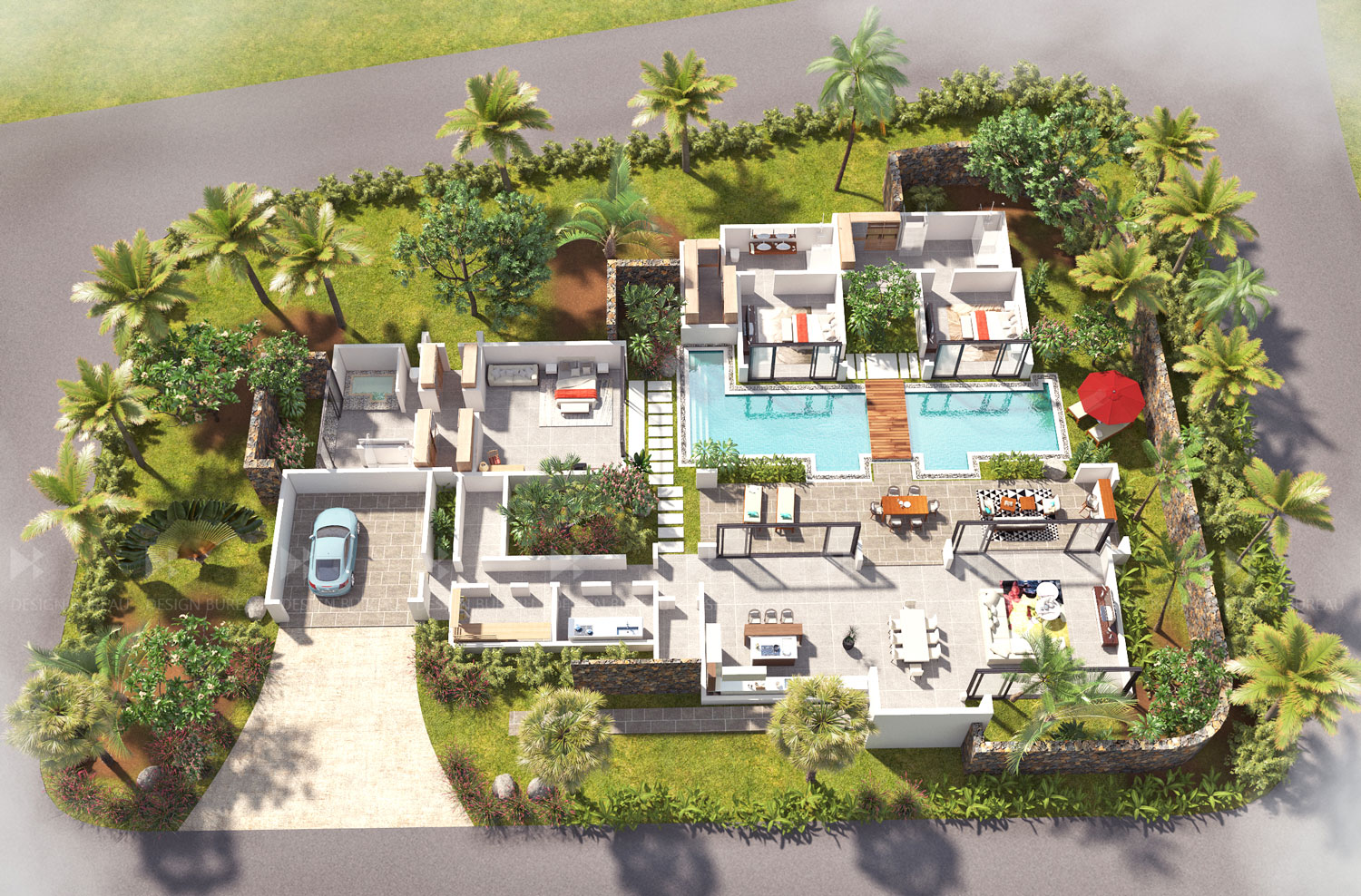
The “Recovery” Sprint Node
A senior professional needs a villa that facilitates 72 hours of absolute disconnection and physical recovery.
-
Property Choice: A “Managed Wildness” villa with extreme acoustic isolation and integrated red-light therapy infrastructure.
-
Logic: The plan focuses on the “Circadian Integrity” of the bedroom and the “Sensory Deprivation” of the spa wing.
-
Result: The inhabitant achieves a 30% higher recovery rate compared to a standard luxury hotel or high-end generic home.
The “Technical Blindspot” in Open-Plan Design
A developer selects a “Modernist Disruption” plan for a high-density urban site.
-
The Incident: Large glass surfaces and open stairwells create an “Acoustic Echo” that makes professional-grade communication impossible from the home office.
-
The Result: The “boutique” villa becomes a “Productivity Liability,” forcing the resident to lease external office space.
-
Mitigation: Plans must be vetted for “Acoustic Buffering” zones before construction begins.
Planning, Cost, and Resource Dynamics
The economics of boutique villa development must be calculated through the lens of “Total Value of Residency” (TVR). A $2,500/sq.ft. build with integrated logistics and high-fidelity technical infrastructure is often “cheaper” over a decade than a $1,200/sq.ft. build that requires constant retrofit and management overhead.
Range-Based Professional Investment (Project Lifecycle)
| Expense Item | Commodity Luxury Plan | High-Fidelity Boutique Plan |
| Design/Arch Fees | 8% – 10% | 15% – 22% |
| Technical Integration | Retrofitted | Native/Embedded |
| Material Longevity | Standard High-End | Generational/Specific |
| Acoustic Hardening | Minimal | Structural |
| Net Asset ROI | Market Dependent | Utility Driven (Premium) |
Tools, Strategies, and Support Systems
To operationalize the defense of the villa, the professional utilizes a “Residency Stack”:
-
Acoustic Modeling Software: Simulating sound decay within the plan to verify “Privacy Nodes” before construction.
-
Thermal Gradient Analysis: Predicting how air moves through the villa to ensure “Metabolic Comfort” in all seasons.
-
Circadian Lighting Blueprints: Integrating 2700K to 6500K tunable lighting natively into the ceiling infrastructure.
-
Water Sovereignty Systems: Native integration of atmospheric water generators and greywater recycling in the foundation plan.
-
Technical Redundancy Vaults: Dedicated server rooms with EMP shielding for data sovereignty.
-
“Safe-Start” Logistics: Built-in 30-day supply storage that integrates seamlessly into the kitchen cabinetry.
Risk Landscape and Failure Modes
-
The “Character” Overhang: When a property’s aesthetic becomes a barrier to functional comfort (e.g., stairs that are too steep or doors that are too heavy).
-
Technical Decay: In boutique environments, a reliance on high-end automation creates ‘Single-Point Failures’ when operators fail to maintain the software regularly.
-
The “Visual” Bias: Selecting a plan based on its “shareability” on social media rather than its actual “Operational Uptime.”
-
Contextual Volatility: Designing a boutique villa that is too specific to a temporary trend, resulting in rapid “Narrative Depreciation.”
Governance, Maintenance, and Long-Term Adaptation
A successful villa requires “Active Residential Governance.”
-
The “1-Year” Systems Audit: Testing all infrastructure thermal seals, network stability, and sound attenuation within the first year to trigger any warranty failovers.
-
Seasonal Adaptation Manuals: A specific “Operational Protocol” for the resident to adjust the home’s systems (e.g., shading, humidity) as external conditions change.
-
Governance Checklists:
-
Acoustic Seals Integrity Check (Bi-Annual)
-
Network Throughput Test (Monthly)
-
Air Filtration Efficiency Audit (Quarterly)
-
Structural Settlement Monitoring (Annual)
-
Measurement, Tracking, and Evaluation
-
Leading Indicators: Sleep Quality (via biometric tracking integrated into the home); Indoor Air Quality (IAQ) scores (<500ppm CO2); Network Latency (<10ms).
-
Lagging Indicators: Property Value Retention; Inhabitant Productivity Metrics; “Environmental Satisfaction” scores over 5 years.
-
Documentation Examples:
-
The Performance Log: Tracking the home’s energy consumption vs. inhabitant well-being.
-
The “Systemic Registry”: A digital twin of the villa documenting all material origins and technical specifications.
-
Common Misconceptions and Oversimplifications
-
Myth: “Boutique means small.” Correction: Boutique means “Calibrated.” It refers to the depth of the design, not the footprint.
-
Myth: “A smart home is a boutique home.” Correction: Automation is a tool; boutique is a philosophy. A truly high-fidelity plan may use fewer “gadgets” in favor of superior passive design.
-
Myth: “Design-first plans are the highest quality.” Correction: Architecture is the surface; infrastructure (acoustics, air, light) is the product.
-
Myth: “Blueprints are just layouts.” Correction: Blueprints are “Operating Systems.” They dictate the behavior of the inhabitants.
Conclusion: The Emergence of the High-Resolution Node
The architecture of a successful life in 2026 is built on the pillars of “Technical Rigor” and “Contextual Stewardship.” Identifying top boutique villa plans is not an act of leisure or aesthetic whim; it is a high-level procurement of a life-multiplier. By moving from a passive “Inhabitant” mindset to an active, infrastructure-focused “Steward” model, the modern resident transforms their home into a stable competitive advantage. In an increasingly volatile global environment, the character of your residence is the foundation of your sovereign output.